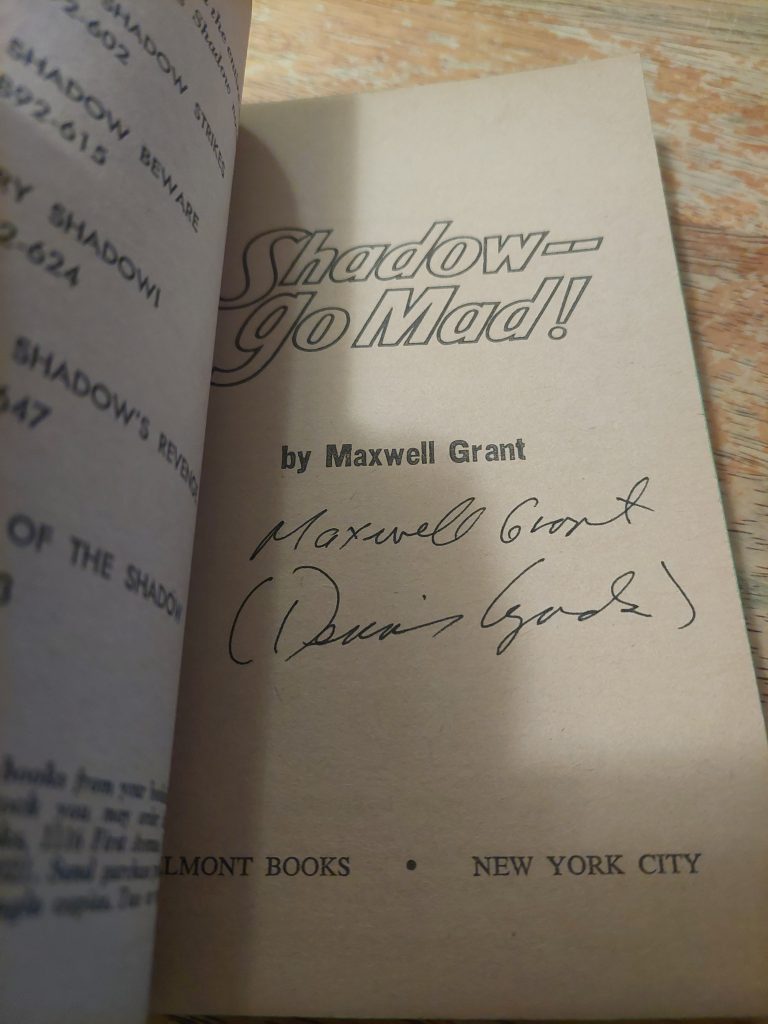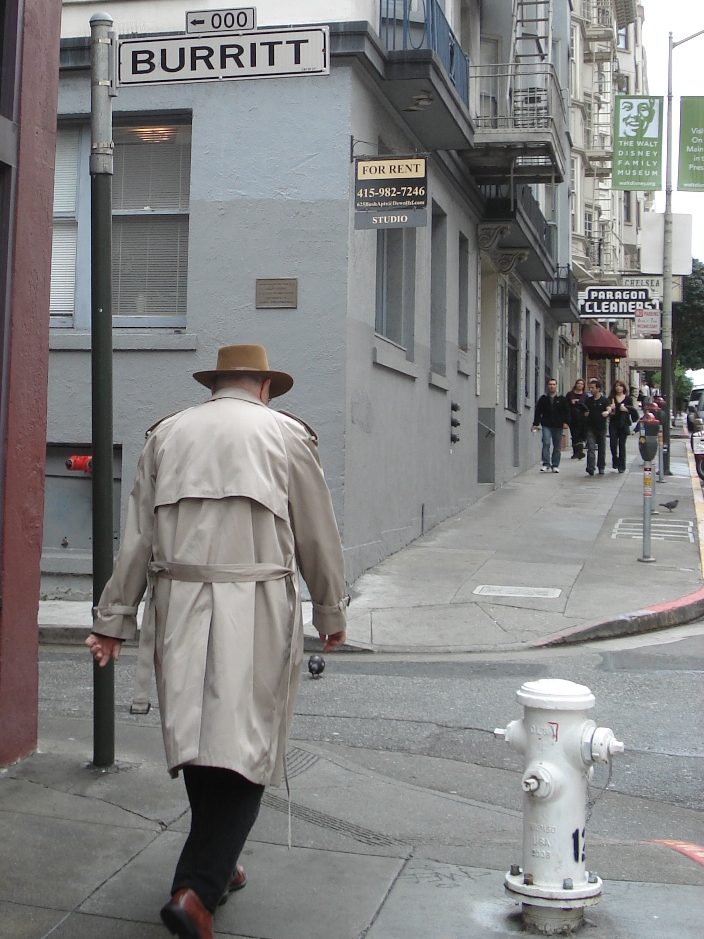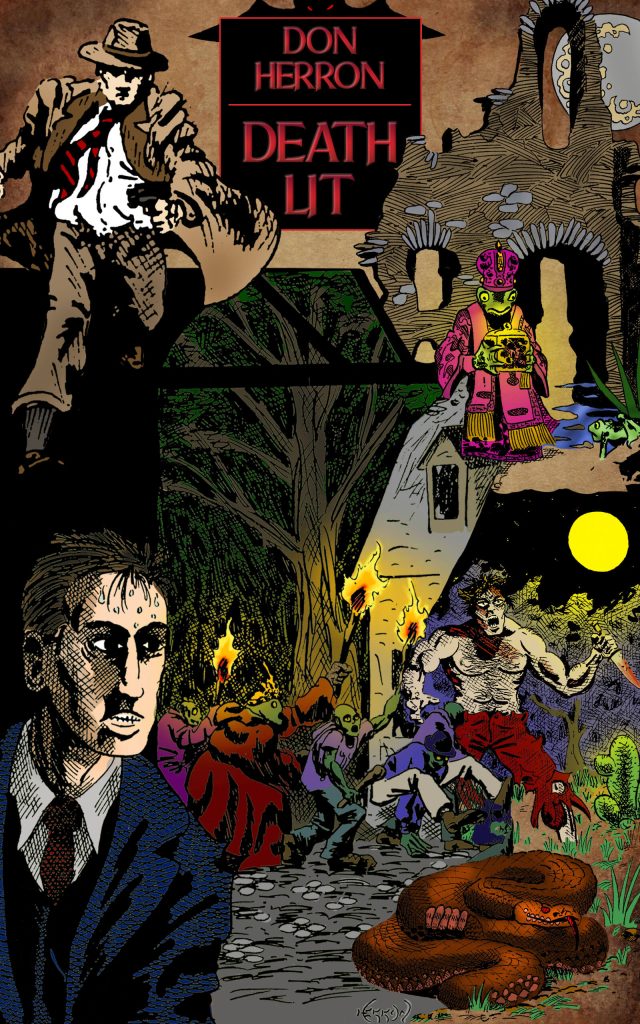
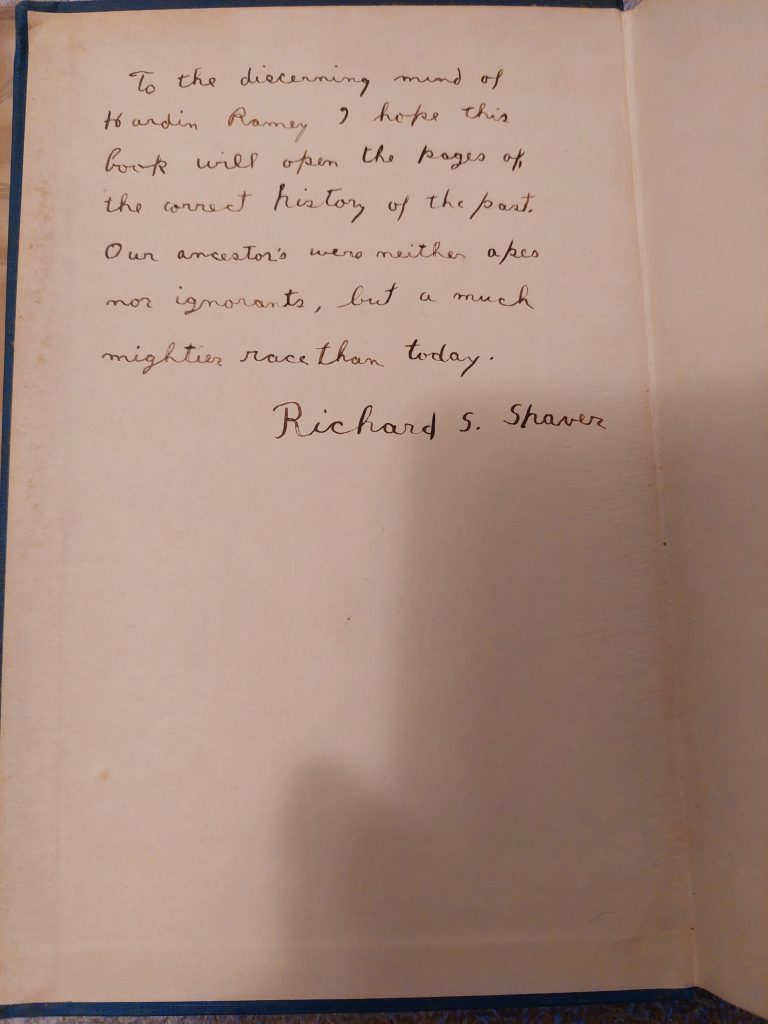
Autograph Hound Saturday yet again, and Brian Leno goes all caveman on us. I’ve always liked cavemen.
Here’s a quick note from Brian:
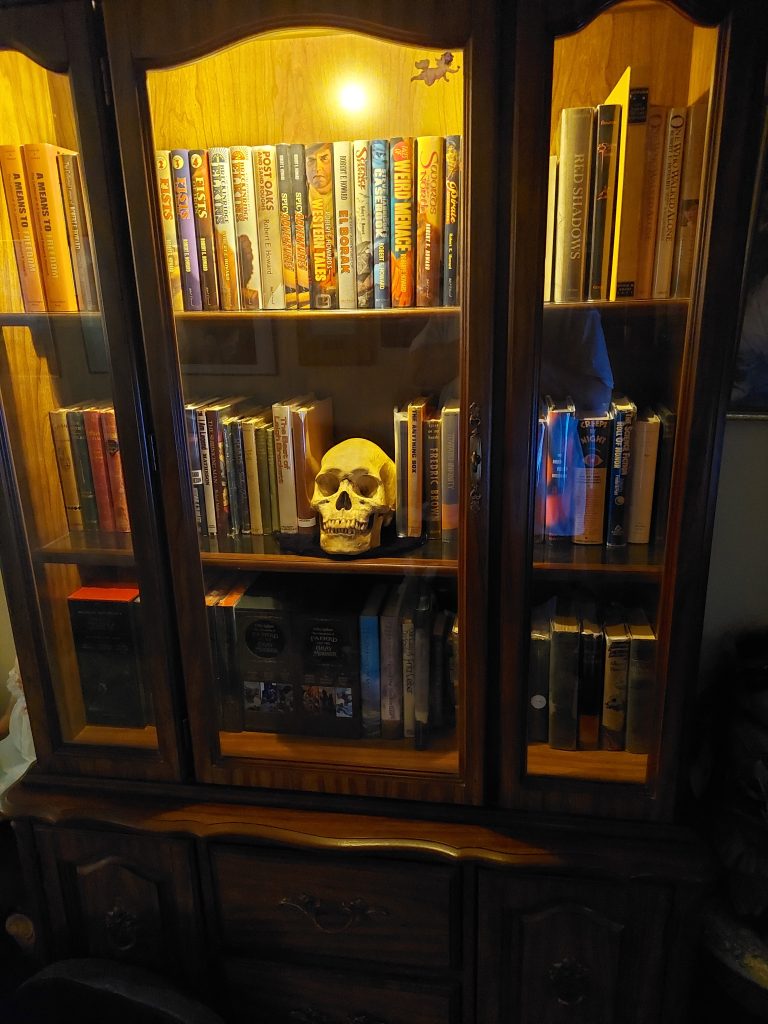
Thought you might like to see the Og books, all inscribed by Irving Crump to the late bookseller Gerry de la Ree. At first, as I told you, I just bought the start of the series, but realizing I could not break up the set I bought them all.
Charles Livingston Bull was the illustrator of the Og, Son of Fire volume, and I liked that dj so much I hunted around and found his autograph, with a little drawing of a bunny, in a F. St. Mars volume.
I’m poking along, compiling another LitCrit MegaPack of my selected essays and reviews. Just scanned through the over 200 reviews I did for Publishers Weekly. Almost all short. Very tight word count. One that caught my eye was Noir by Robert Coover from 2010. If you like this kind of spin on the genre, then you might like this spin on the genre:
Metafiction lustily mates with hard-boiled mystery in this hilarious homage to Raymond Chandler and company, as Private Eye Philip M. Noir slips on his gumshoes and lacy underwear and hits the mean streets. He has a case, a client, but the widow goes missing. He encounters the Creep, Fingers, Rats, Snark, and an elusive fat man named Fat Agnes. He even meets people who “live in a different world. It was called daytime.” Prolific postmodernist Coover (The Public Burning) adds his dazzling two bits to the deconstructionist turf Paul Auster prowled in the New York Trilogy. “There’s a mystery here, but you’re a street dick, not a metaphysician. . .” Like Pynchon in the recent Inherent Vice, he pops off laughs on every page. “Her brother is in it somewhere and he is said also to be wearing women’s underpants and a bra. . . Is he your double? No, you don’t have a bra.” And don’t forget, Chandler was really funny, too.
Dennis McMillan phoned this morning and we caught up. After I got off the line I popped him the info on The Burnt Shadow and The Burnt Machens, where he played a role.
Then he sent back this photo — “of me, Nisbet, and ‘Dutch’ Leonard, signing at the UCLA Festival of Books 5 million years ago. . . .”
Dennis is in the hat and Hawaiian shirt, Jim Nisbet sits in front of him — Elmore Leonard is off to the left in the solid blue shirt.
In addition to mucho such research, Will must be as well or better known as a neo-pulpster, ghosting dozens of the paperback originals in The Destroyer series back when and more recently writing Doc Savage adventures under the traditional house name Kenneth Robeson.
Will dropped me a note saying, “I came across a mention in a 1929 newspaper that Dash Hammett and Raoul Whitfield were collaborating on a stage play version of The Maltese Falcon. Have you ever heard anything about this? Obviously, nothing came of it. Would you know if the stage play was ever finished? Does it survive? Probably not. An interesting footnote to the history of the novel….”
I never heard of the idea. Whitfield’s main connection to Hammett was as a fellow writer for Black Mask — Hammett reviewed and promoted his hard-boiled novel Green Ice. And had an affair with his wife, Pru Whitfield.
The headlines for the article in the Victoria Daily Times read:
Novelist Here
From Hollywood
Finishing Books
— —
Raoul Whitfied Now Com-
pleting “Green Ice”
and “Wings of Gold”
— —
Collaborating With Dashiell
Hammett in Adapting “Mal-
tese Falcon” to Stage
The text in the article adds no additional info in re: the play. Hammett of course talked about doing such a play, and the way he constructed the novel makes the idea seem logical.
On the business side of things, Will notes, “Benjamin F. Glazer signed a contract to adapt Maltese Falcon as a stage play in Aug 1930, but the contract was voided that December.
“In 1945, Laurence Stallings did the same. That contract was voided Feb 1946.
“Strange. Did they both find the adaptation too daunting?”
Diving deeper into Hammett, Will says, “Another interesting item I discovered was that John Barrymore was slated to play Sam Spade in the 1931 film. But some kind of scheduling conflict knocked him out of the picture.
“Barrymore was announced in the role in October 1930 but by December papers were reporting that he was doing Trilby instead. Trilby was ultimately released as Svengali.”
John Barrymore as Sam Spade! What would that have done to the history of cinema? Could he have out-Sammied Bogie? Probably not with that 1931 screenplay, but at least it would have paired him with the great Dwight Frye.
And to make it a trilogy, Will adds, “Another odd thing I discovered is that a random California newspaper serialized The Maltese Falcon in the middle of 1930. That seems strange when the book had just come out.”
Yeah, published by Knopf on Valentine’s Day 1930. And later that year in The Chico Record.
But as my pal the late great John D. Squires determined, the newspapers were going wild with reprints. He once spotted a reprint of Hammett’s The Thin Man from 1934 in The Australian Women’s Weekly for February 15, 1936.
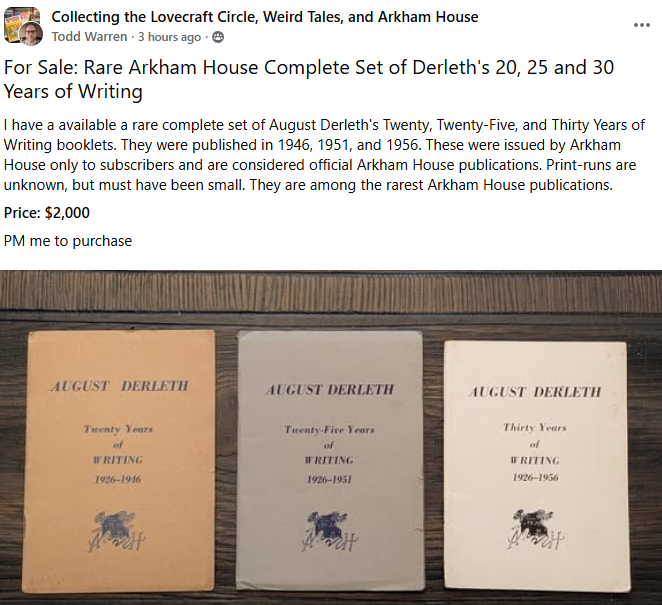
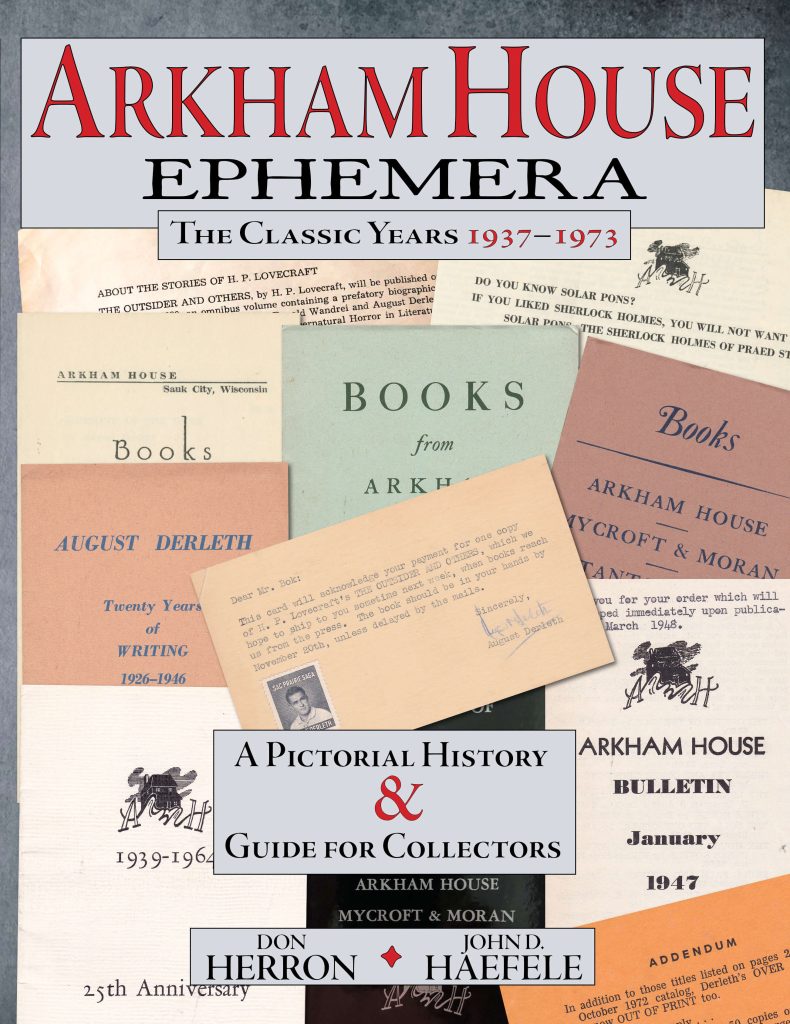
Brian Leno has nabbed another couple of items for his bulging shelves — or you could think of it as three, maybe four items. The book Place of Hawks. The belly-band on the dustwrapper. A letter from August Derleth, a few years before he started up the publishing firm Arkham House with Donald Wandrei, with a letterhead new to me. And the personalized envelope it was sent in, with postmark – — you can see the top of the envelope off to the side on Brian’s hurried snap.
He teased it a few emails back: “I’ve got a pretty cool August Derleth book coming in a couple of days. Might be blog worthy. Like Trump always says, ‘I’ve never seen anything like it.'”
Here’s Brian:
This is the Derleth thing I was trying to be so mysterious about. It’s a rare book in jacket, but I believe doubly rare because of the wraparound or belly-band. Never seen another copy with the belly-band — honest, it’s tough enough to find the book with any kind of decent dustjacket.
I’m in unknown territory here, I’m no Derleth scholar. Haefele probably has five copies of it.
The belly-band is interesting, with Edward J. O’Brien and Alfred Dashiell being the two reviewers. O’Brien was for a long time editor of Best Short Stories of (pick a year) and Alfred Dashiell was an editor at Scribner’s and Reader’s Digest.
The letter, from a young appreciative Derleth, is to Clyde Beck — a reviewer for the Detroit News. I’ve no proof, but I got the book from a seller in Detroit and I’m thinking this was Beck’s personal copy. Another Beck review was of Gone With the Wind, which he liked.
The letter is interesting, Derleth is trying to cozy up to Beck. Mentions Murder Stalks the Wakely Family, the first Judge Peck mystery. Plus another one, We Live in the Country — don’t believe that title ever appeared on a Derleth book. So, a “ghost title”? A lost Derleth book?
“What a thoughtful and perceptive video-review of our book,” he wrote, “just discovered and very much appreciated!”
And he got a comment from Leo Grin of The Cimmerian Press: “The video close-ups really bring home how well the book came out as a full-color art book. And she ‘got’ the multi-tiered historical aspect.”
Voiceover with nice video delving into a copy of the actual book. Quick and easy, a little under three minutes.
The Infinite Text vlogger has more coverage of weird fiction, Victorian lit, Weird Tales — books-about-books stuff. I guess if Vincent Starrett was around today he’d have to grab a camera and a mic. . . .
At the end of February 2025 I noticed in the Rare & Collectable section of the Weekly Update email from the Mysterious Bookshop the following listing for Hammett’s story “The Judge Laughed Last”:
Hammett, Dashiell, “The Judge Laughed Last,” contained in the Feb. 13, 1938 issue of Grit. The first appearance of this story, later collected in They Can Only Hang You Once with the title “The New Racket.” An about fine copy of this fragile and rare publication. $125.00
Interesting for several reasons. First, the original title of the story was “The New Racket,” not “The Judge Laughed Last.” The story was originally published in the February 15, 1924 issue of Black Mask. It was first collected in the Adventures of Sam Spade and Other Stories.
They Can Only Hang You Once became the title of the second edition of ASS.
But this reprint in Grit. . . . Galactic Central notes that Grit is “a weekly newspaper targeted at rural US families.” It is still a going concern. The reprint in Grit is from 1938. Fred Dannay then reprinted the story in the March 1944 issue of Ellery Queen Mystery Magazine and collected it in ASS that same year.
I appear to be wrong, unless Dannay had something to do with getting this story reprinted in Grit.
The edits made to the story as it appears in ASS are minor. I would be interested in learning whether these edits are in the version of the story as published in Grit. But not interested enough to lay out $125 to Otto.
If the edits are in the version from Grit, I wonder who made them? Was Hammett involved? It would suggest that Dannay sourced the version he included in ASS from Grit.
Welcome to a hard-boiled and not without noir blog with news and reviews, occasional outbursts of maniacal Autograph Hound activity, plus archival records from the forty-five year run of The Dashiell Hammett Tour.