Rediscovered: Another Round in the Posthumous Fame Ring for Jim Tully

Bruiser

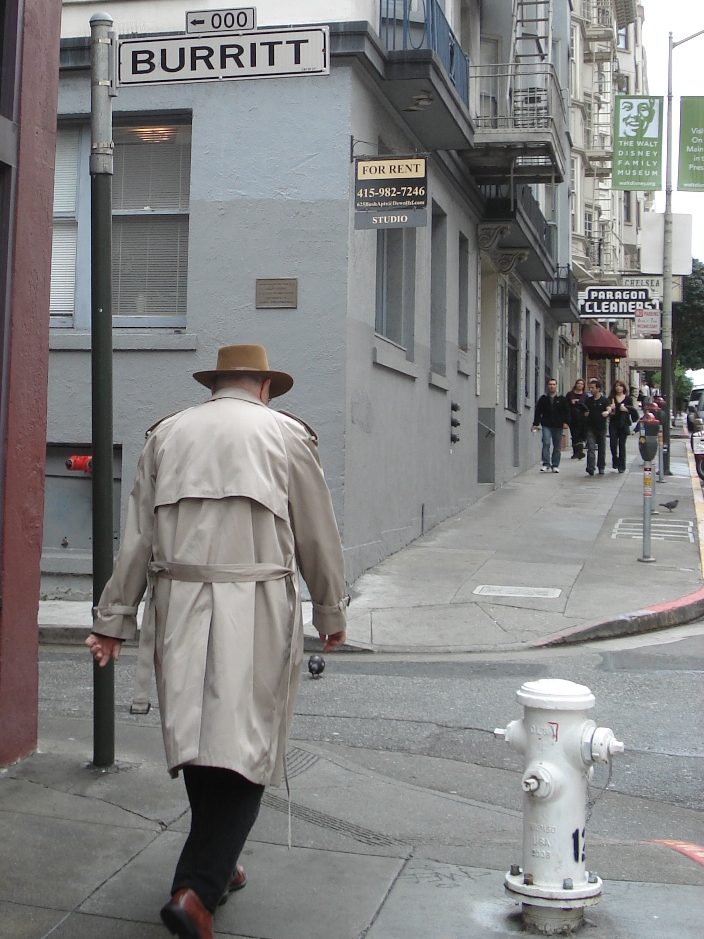
Up and Down These Mean Streets favorite Jim Tully gets another chance to climb up off the mat and be a contenda — a public radio deal from last November with an illo-filled article. He’s not going to be counted out easy.

Tully biographer Mark Dawidziak, last seen here as a proof-reading shamus, let me know about this latest burst of publicity for the pugnacious little redhead.

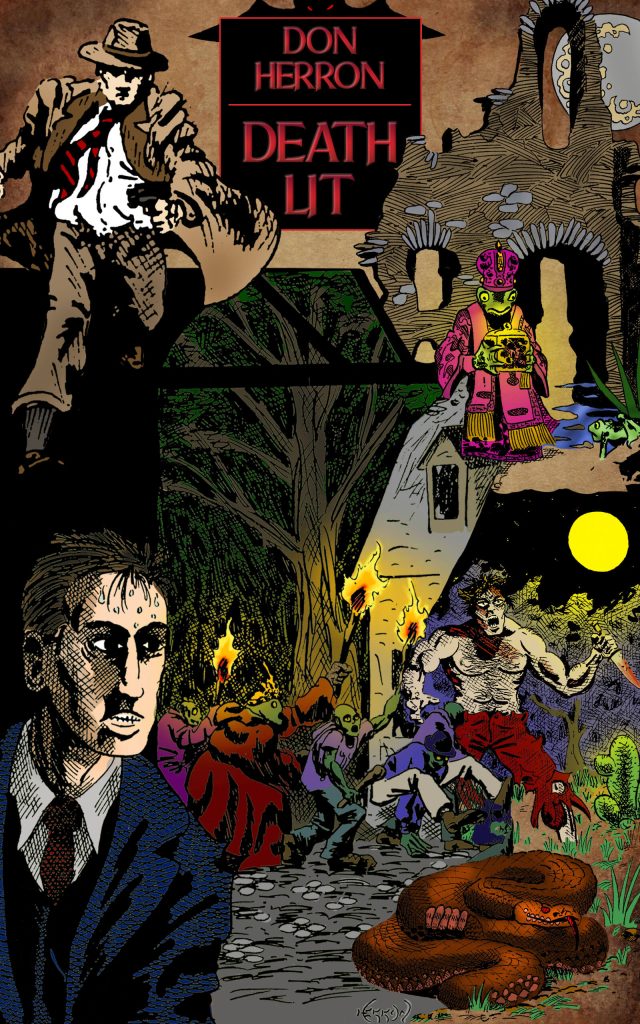
A few months ago I did a read and reread on some Tully, courtesy trade paperback reprints from Kent State University Press — the boxing novel The Bruiser didn’t do that much for me but Circus Parade (a favorite of Charles Willeford) had the stuff, and while I was skeptical that Shanty Irish might tend too sentimental for my tastes, I enjoyed it — there are a couple of chapters about swapping stories in a bar that perfectly capture that kind of magic.

I suppose you could just hang out in bars and drink, but the characters and their stories that wander in and out the bar doors add something you just can’t match by staying home with a bottle of hooch.

Posted in Boxing, Lit, News | Tagged , , |

Hammett: “The Dimple”

Saucy Stories 101523 How to mark the first day of a New Year? How about The Return of Terry Zobeck?

Terry’s back with another installment of Zobeck: Series Two, where he details editorial changes wrought by Frederic Dannay when he reprinted various Hammett stories. Today you can get these stories in “pure text” versions, but if you’re interested in seeing what Hammett fans had to live with for decades, here you go.

To conclude Zobeck: Series One — Hammett stories that have yet to get a pure text reprint — Terry only needs one more story, “The Nails in Mr. Cayterer” from the January 1926 issue of Black Mask. Maybe 2015 will be the year he finally lands that text and gets to wrap that project up.

Meanwhile, Terry’s at work on yet another pure text project that will blow big time Hammett fans away — certain to be his magnum opus in this vein.

But for now, let’s hit the Mean Streets with a smaller scale inquiry into an early Hammett tale. Here’s Terry:


“The Dimple” is a slight story running to just over three pages in Lost Stories where the pure text can be found. It exists simply for the twist at the end, which was sufficiently racy for the times to meet the requirements of Saucy Stories, where it appeared in the October 15, 1923 issue.

Frederic Dannay reprinted it in the August 1959 issue of Ellery Queen Mystery Magazine under the title “In the Morgue”, and collected it in A Man Named Thin (1962), his final Hammett collection.

The story is not without interest to Hammett aficionados. For one thing, the protagonist, Walter Dowe, is a writer. He is so consumed by his work he does not notice until after 3:00 a.m. that his wife, Althea, has not returned from a night at the theatre with friends. He soon learns that there has been a terrible fire with many casualties at the Majestic.

I conducted a little research to try and determine whether this aspect of the story was based on a real event. While there appears to have been two theatres in San Francisco at the time named The Majestic, neither was reported to have suffered such a fire.

On the other hand, unfortunately, there have been many such theatre fires that could have provided the needed inspiration.

After being turned away at the site of the fire, Dowe wakes up his friend Bornis, a police commissioner. Dowe figures Bornis has enough juice to get past the city’s officialdom. They make the rounds of the hospitals without finding her. Bornis then directs the cab to the morgue. Here is one of the only flashes of interesting writing in the story. Dowe and Bornis pass down a long line of victims; the bodies were “mangled horribly; denuded, discolored and none the less terrible because they could not scream.”

Typically, Dannay edits out the part following the semicolon; perhaps he thought it too graphic for 1959 sensibilities, but it is the most powerful and vivid image in the whole story. One suspects that Hammett in his previous job had experience of burn victims.

While Bornis is a good friend of Dowe’s, he and Althea never got along, keeping their distance from one another whenever they met. The twist comes when they discover a body that is seemingly unrecognizable, with:

A face that stampeding leather heels had robbed of features; a torso that was battered and blackened and cut, and from which the clothing had been torn. All that was human of it were the legs; they had somehow escaped disfigurement.

Bornis is the first to recognize Althea’s body, as with a shriek he points at one smooth knee, “See! The Dimple!” I suspect this twist might be lost on more recent generations of overexposed readers.

As usual the following list provides the page number, the line number and whether it is from the top or bottom of the page, and the affected text — Hammett’s original wording is underlined. The page numbers refer to the story as it appears in A Man Named Thin.


Page    Line     Top/Bottom     Text

88        15        bottom             In the Morgue The Dimple

88        11        bottom             3:15 A.M. three-fifteen

89        12        top                   been pretty bad . . . Lots of folks hurt . . .

89        3-4       bottom             Told me to wait–; but and I can’t! You’re the a police commissioner–; [the em-dashes should be replaced with semicolons]

89        2          bottom             [the paragraph starting here and running to the first two paragraphs on page 90 (lines 1-15) are a single paragraph in Hammett’s original]

90        16        top                   Bornis finished dressing and they went quickly to the City Hospital Bornis caught up the rest of his clothes and they went down to the street. He finished dressing in the taxicab.

They went to the City Hospital first,

90        12        bottom             When they got back to the taxicab

90        7          bottom             that were mangled horribly; denuded, discolored and none the less terrible because they could not scream.

91        4          top                   He would not believe have this begrimed, mangled thing was his exquisite white Althea!

91        7          top                   it was almost a shriek:


Next up in this series is a classic Op tale, “Crooked Souls”.

Posted in Dash | Tagged , , , , , , , , , |

Frisco Beat: Bay Guardian

Best of the Bay 2010 -- Don Herron

And another year rolls to a close. . . .

Which got me thinking about tinkering with my sidebar on the blog, switch it up a bit. . . .

And I realized that the Bay Guardian Award for 2010 was getting a bit old. My first thought was that I could dig out earlier Award posters — think I have at least three or four — and do a little parade of images. I didn’t win every year, but then it’s not as if they have best hard-boiled tour as a category every year — or why wouldn’t I have won every year?

Then I heard a news bit on the radio — tuned in partly through the info — that suggested that the Bay Guardian was closing up shop.

Of course I haven’t been paying close attention, even though I did a review column for the BG for awhile. That, too, is retreating further and further into the past. . . .

So I looked on the net and found that the Bay Guardian is probably going to close down, unless they can find a buyer to carry on.

I hadn’t even heard that Bruce Brugmann, the founder and owner, had sold it to someone else. I met Brugmann a few times, when we’d gather for the giant crowd shots of all the winners for that year. (My fave of the shots was on the bandstand in Golden Gate Park, when I was in the throng with former mayor Joe Alioto, who won that year as the Best Poet Who Was An Ex-Mayor.)

I enjoyed the brief encounters with Brugmann, certainly a local legend — in part because I knew quite a few people who absolutely hated him. At some point before my time, late 1960s I believe it was, there was a newspaper writers strike in San Francisco, and Brugmann decided he wasn’t going to have the Bay Guardian pushed around, and broke the strike.

Made enemies for life. Margo Skinner, companion of Fritz Leiber during his San Francisco years, was one of them. And I think it was at a Fritz und Margo party that I met another longtime local writer who was still gripping about the strike something like 15 or 20 years later — that guy was married to, or living with, the woman who was the real life model for the main female character in Jack Kerouac’s The Subterraneans.

And if memory serves, without digging around in the archives, I’m pretty sure that it was in the pages of the Bay Guardian that the Hammett Tour got its very first write-up.

If it is over, Adios.

Posted in Frisco, News, Tour | Tagged , , , , , |

Two-Gun Bob: The Dark Barbarian That Towers Over All

Towers Over All

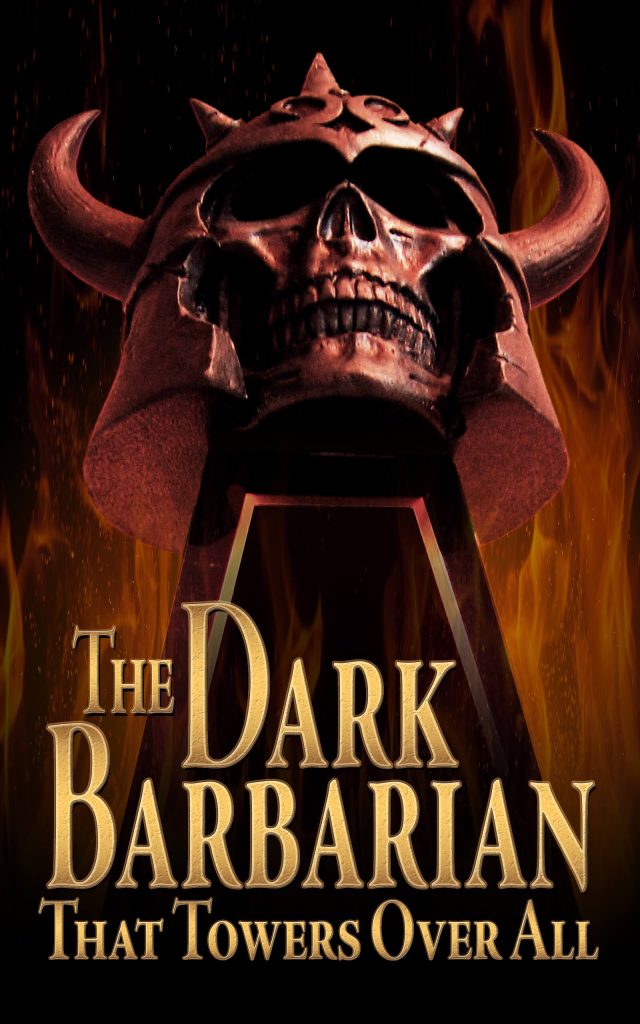
The Big Secret Project I mentioned the other day has jumped to life on Amazon — The Dark Barbarian That Towers Over All, the first ever “Robert E. Howard LitCrit MegaPack” — a Kindle eBook which collects The Dark Barbarian and The Barbaric Triumph together for the first time, with bonus materials which include the booklet “Yours for Faster Hippos,” and enough of my stray essays from 24 years of various Howard zines to make up another entire book. Plus little introductions and afterwords and a couple of essays written just for this occasion. In brief, all the stuff from the set of books I refer to as The Barbarian Editions, and more.

When I do a “LitCrit MegaPack,” you can be assured it is nothing less than Mega.

And did I pay the price — essentially proofreading four entire books again and again for two months so we could pop this one out in 2014 in time to celebrate the thirtieth anniversary of the publication of The Dark Barbarian back in 1984. The latest thirty-year landmark I can lay claim to — my advice to others who like the idea, Start Early and don’t die too soon.

This edition is from The Cimmerian Press, only the second release after John D. Haefele’s A Look Behind the Derleth Mythos. As I keystroke these words, Towers Over All is no.3 on the Horror Litcrit Amazon list and Derleth Mythos is no.4. Pretty good for a spunky little newbie press, right?

Haefele pointed out to me that Towers hit no.2 on Amazon’s Horror Litcrit bestseller list the day it was released — thank you, thank you — but I also notice that it shows up on the Fantasy Litcrit list, too, where it is having a tougher sled. It has cracked the Top Twenty in Fantasy at least on one day, but there is arrayed against a horde of titles about Tolkien and George R.R. Martin and Harry Potter — all bestsellers propelled by movies and hot HBO series.

Tough competition. But then I thought about it for a second and scanned through the list of the Top 100 titles in the Fantasy Litcrit category, and Towers is the ONLY book about Robert E. Howard, creator of Conan, to crack that list. It might never reach the top spots, but if it has put Howard’s name back in that roster, I am content.

If you do Nook instead of Kindle, you can hop over to The Cimmerian Press homepage and pickup an EPUB file for the same price — $4.99 — as on Amazon. I figure eBook LitCrit MegaPacks have to be BIG, but part of the appeal is that they should be giving you a lot of bang for your buck.

Posted in News, REH | Tagged , , , , , , |

Hammett: And Prohibition

Prohibition Photo

Per my normal Xmas rituals, I’ll be heading up to the dinner table in the hideout of Floyd “Tattoo the Wicked Cross” Salas, but here’s a tidbit to hold down a place under the tree: some casual speculation on Hammett and drinking by none other than Mark Murphy. You’ll remember Mark as one of the tenants of The Maltese Arms.

And isn’t speculating about Hammett and/or drinking what most of spend our lives doing?

Here’s Mark:


“Even though he wrote during Prohibition, few Hammett characters were teetotalers. For better or worse, he popularized what is now a cliché: the hard-drinking detective.” — from Vince Emery’s “Hammettisms in The Maltese Falcon.”


I’m just now celebrating the 84th or 85th anniversary of the time Hammett must have been working on The Maltese Falcon, in this very city, in this very building, by reading it again for the some-teenth time.

One of the scenes from this novel that always tickles me is Dundy and Polhaus’ first visit to Spade’s apartment on Post Street, from the chapter “Death in the Fog.” Between the time Spade arrives home from the scene of his partner’s death (3:40 am) and the time the street door buzzer sounds at 4:30, he had already finished his third drink and was just lighting his fifth cigarette.

When the two detectives enter, Spade offers them each a wine glass filled with rum, which they drink, though Dundy with perhaps a little less gusto than his partner: “Lieutenant Dundy turned to the table, picked up his glass, and slowly emptied it.” (Presumably not on the floor.) Spade also refills his own glass and begins work on what would be his fourth drink if we’re keeping count.

All of this at 4:30 in the morning, or thereabouts.

I’m reminded of the time, years ago, while hanging out at Sutter Station bar listening to my good friend Bill Arney tell his story of reading The Maltese Falcon and trying to recreate the ambience of this scene in his apartment. (He lived, not entirely coincidentally, in the apartment believed to have been occupied by Hammett at time he wrote the book.)

The twist was that Bill, being not terribly familiar with the variety of rums available back then, mistakenly picked up a bottle of Baccardi 151 and nearly choked on it when he tried to quaff it down, burning hell out of his throat in the process.

(Sorry, Bill, if I got some of the details wrong, but that’s how I remember it, from some twenty-odd years ago).

I tried a similar experiment last night with standard Baccardi white rum, and still have to say it is no easy trick to drink down three wine glasses in the space of fifty minutes as Spade does. And though I did manage to pull it off, I would have been hard pressed to have much of an intelligible conversation during or after, though having two homicide detectives for company, with me as a possible “person of interest” in a murder case, probably would have helped to keep my mind focused and alert.

From what I understand, it would not have been that unusual during the Prohibition era for a person to be drinking as much as Spade obviously does: it seems in almost every major scene in the book the reader finds Spade imbibing freely. Whether it’s Manhattan Cocktail from the desk drawer in his office, rum-filled wine glasses in his studio apartment, or coffee spiked with brandy while he grills Brigid for information on the Black Bird, the PI seems to be fairly well buzzed, if not falling down drunk, throughout much of the story, yet still manages to keep his focus and solve the case in the end.

What caught my attention about this particular scene, though, is the two on-duty police detectives drinking during the course of an interview connected with a pair of murder investigations. In today’s world obviously this would be unheard of, but perhaps in the context of the times this would not have raised too many eyebrows.

Indeed, since the liquor law was federal, it may not have been within the jurisdiction of these two city cops anyway to raise much of a fuss about it. And simply drinking, as I understand it, was not prohibited as long as you weren’t buying or selling it (or manufacturing it with the intent to sell). But still, the thought of on-duty cops drinking like this definitely raises my eyebrows. I’m just curious as to how the readers of the late twenties and early thirties must have reacted.

One must keep in mind, of course, that this is fiction, and possibly not reflective of how people actually conducted their affairs at the time. Even so, was it not the “realism” of Hammett’s writing style part of what made him stand out from the crowd of crime fiction writers of that era? Oooh, and it makes me wonder. . . .

Of course, the Op did his share of drinking, too; in fact, one of my favorite passages from any of the Op stories is from the opening paragraphs of the chapter “Old Elihu Talks Sense,” from Red Harvest, where the old man summons the Op back to his place to take him up on his offer to “clean up the city.” The call from Elihu’s secretary had sounded urgent, so he promised to hurry, asking the clerk to get him a taxi, then went

…up to my room for a shot of Scotch.

“I would rather have been cold sober, but I wasn’t. If the night held more work for me I didn’t want to go to it with alcohol dying in me. The snifter revived me a lot. I poured more of the King George into a flask, pocketed it, and went down to the taxi.”

That’s right: I’d rather show up at the client’s place drunk, than coming down off a serious liquor buzz.

This, mind you, was shortly after a full evening of fairly heavy drinking over at Dinah Brand’s pad on Hurricane Street. And, even before that, he had sunk at least a drink or two of “Scotch, lemon juice and grenadine” during his second interview with Robert Albury in the Op’s hotel room at the Great Western earlier that same day.

(I wonder if they serve that drink at John’s Grill? If not they should, and call it the Red Harvest. About.com has this drink labeled simply a “New York Cocktail.”)

Though I’ve never studied the subject of Prohibition in the US in any great depth, and have only Google, Wikipedia and Ken Burns as references, it has always fascinated me. My general impression was that during those times the major cities in the US could be classified as either “wet” or “dry,” meaning cities where the law was vigorously enforced were considered “dry,” while those that enjoyed a much more lax enforcement regime were the “wets.”

The famous Prohibition agent Izzy Einstein, of the storied “Izzy and Moe” team of rum sleuths, liked to see how long it took him to get a drink, whenever he would arrive in a new town. The winner for the nation’s number one wettest city, at least by this standard, was New Orleans, at thirty-five seconds: having stepped out of the train station and into a taxicab, he was greeted by a friendly cab driver who said “How do you do?” and immediately offered him a pull from a bottle of whisky retrieved from under the front driver’s seat.

Welcome to New Orleans!

I don’t really have any direct knowledge of whether San Francisco would have been wet or dry, but given its history my educated guess would be that it might well have been #2 after the Crescent City.

What we also know about Prohibition was that, in the end, its ultimate effect was to have increased rather than decreased the amount of drinking in the aggregate, nationwide. So it’s not difficult at all to believe these scenes of heavy drinking we find in Hammett’s works, almost all of which (certainly the most important ones) were written and set during the time the Volstead Act would have been in effect.

Even The Thin Man, with all its crazy drinking scenarios, must have been written before the Act’s repeal, as it was published in January of 1934, less than a month after the Blaine Act officially consigned Prohibition into the dustbin of history.

So one could say, with some accuracy, that the end of Hammett’s literary output coincides almost exactly with the passage of the 21st Amendment.
Posted in Dash, Frisco | Tagged , , , , , , , , , , , , |

Rediscovered: Great Moments in Tough Guy Litcrit

Among the casual hobbies I indulge in from time to time: trying to toughen up my pal and occasional Guest Blogger Brian Leno when he is knocking out the litcrit. Makes for a fine counterpoint to the usual cheer and cheese you get around this time of year, too.

I know he’s got it in him, but Brian is such a nice guy, he just doesn’t want to put his best lean mean lines into print.

I’m certain he could do it — last month he popped me a note:

Saw a movie critic today rating the best horror movies for Halloween and his number one pick was The Shining. Moron. Said it really scared him.

What a wimp.

Brian’s got that colloquial knack, you know he’d be at his peak if you could just put a mic on him and get his first impressions. For example, I was talking with him after he read John Haefele’s A Look Behind the Derleth Mythos and he paused, thinking about one of the so-called Lovecraft “critics” who comes under Haefele’s scrutiny — and how lividly angry this little cultural commissar would be about having his views challenged.

Out of nowhere, Brian said, “He probably filled his pants three times, and blew off a shoe.”

Man. He could be like some kind of rude Mark Twain of litcrit, if he’d just let it rip.

To date, my absolute fave of Brian’s off-the-cuff comments rolled in after I sent him a link about the release of the eBook Bareknuckle Barbarian — part of the Fight Card Series, in this case two stories about the Texan Robert E. Howard, creator of Conan, ending up in a boxing ring in New York City and then on to fistic action in Ireland. I can see some fight fiction with Howard as the mauler, and have nothing against that concept — after all, I spotlighted Howard and boxing by putting the Mark Finn essay “Fists of Robert E. Howard” first up in my litcrit anthology The Barbaric Triumph back in 2004, and further emphasized the idea by using a photo of Howard in a boxing pose for the frontis.

But both Brian and I tend to take Howard pretty seriously, so while I think either of us would maybe read a story about the writer in boxing matches in Texas or Mexico or some back alleys in New Orleans, the jump to NY and the land of Eire is just too much. Howard never made it that far east of New Orleans, never got to New York, and although he had a passionate Irish heritage thing going on, certainly never got to the Emerald Isle. Who knows, if he hadn’t killed himself with a gunshot to the head at the age of thirty, maybe he’d have traveled in that direction.

As soon as I saw the blurb, I thought, Jeez, how stupid — I’ll have to send this to Brian (and Brian, of course, is also big into the history of boxing). He won’t want to read it, either. . . .

Now, for someone other than me or Brian, this eBook might sound just great. The wet dream of the right kind of fanboy. Howard, man, boxing in Ireland! Can’t wait to read that!

And I wouldn’t want to knock the Fight Card Series in general. I’ve read three or four or five of the early entries, and in fact congratulate the team on coming up with the concept and knocking out a new little novel, or novelette, every month. Paul Bishop, the main honcho for the project, mentioned this statistic a few weeks ago, with 40 titles that far and more on the card.

And what did Brian say about the blurb for Bareknuckle Barbarian to enter the Tough Guy Litcrit Hall of Fame?

Two lines:

My eyes are bleeding. At least the poor bastard can’t kill himself twice.


Posted in Boxing, Lit, REH | Tagged , , , , , |

Tour: Sunday January 18

don9

Next walk where anyone with $20 and four hours to spare can just show up and gumshoe the mean streets will be Sunday January 18 — and, yes, rain or shine. Bring an umbrella if needed or deck yourself out Old School in hats and trench coats.

Be near the “L” sculpture by noon, ready to go. As easy as that.

(Shot above: tour across Post Street from Spade’s apartment in 891 Post, with the What a Grind coffee shop to one side of the entrance and the coin laundry in 895 Post on the other.)

Posted in Frisco, Tour | Tagged , , |

Rediscovered: That Haefele/Harksen First Edition Hardcover

DM Promo

You may recall that I had my initial encounter with John D. Haefele — author of A Look Behind the Derleth Mythos — back in 2002, when he added his research into Arkham House ephemerae to the stack of notes I had on the subject. The result was an article in the October 2002 issue of Firsts: The Book Collectors magazine on all those brochures and stock lists and flyers. If you collect Arkham and don’t have that issue, you should pencil it in on your Xmas Wish List.

And for those of us who appreciate ephemerae (I used to knock out flyers and brochures for the Hammett Tour back before the website came along and occupied that environmental niche), Haefele just sent me a scan of what must be the earliest piece of ephemerae for his Derleth Mythos project: a single sheet broadside announcing the forthcoming first edition hardcover of the book from Danish publisher Henrik Harksen. He believes about 100 of these sheets were printed up and laid out on a table for just such flyers for the Mythos Con in Arizona in January 2011.

The intended publication date of “Early 2011” was overly optimistic. They barely squeaked the book out just before the end of 2012. Then the hardback had all of 2013 and most of 2014 to itself, before the completely revised and expanded trade paperback came alive in September.

As I’ve mentioned, I’ve been making a little hobby of following how Derleth Mythos is doing on the Amazon bestseller list for Horror Litcrit. It seems to hold down the no.2 or no.3 spot most days for over two months now, and at this moment is no.5. Occasionally it slips out of the Top Ten, and for a couple of days dropped out of the Top Twenty.

The most startling thing I noticed, however, was that the first edition hardcover from Harksen’s press suddenly cracked the Top Twenty. What the hell. The revamp costs under $20 — but the Harksen edition was initially selling in the $50-$60 range. When I spotted it in no.11 place on November 16 (the trade paper was at no.4), the asking price had jumped closer to $90. Lately the prices have soared. On ABE books today a single copy is listed for $696 (yes, $696, not a typo), and the last one listed for sale on Amazon — before they put the Harksen in the out-of-print category — was asking $1222.06.

I don’t know the reasons why (other than that Derleth Mythos is the best book on the subject ever done), but obviously Haefele is the object of some rampaging hyper-modern inflation. Like Stephen King back in the day.

If you’re hesitant to jump in with prices surging from $60 to over a thousand in just two months, here’s a collectors tidbit for you: Haefele tells me that the Harksen first edition hardcover apparently sold less than one hundred copies, and of course has been pulled from the market. The complete universe of available copies is in two figures, and I have no intention of selling my copy. Haefele’s Heretics have all assured me they are keeping their copies. Collectors who didn’t get in fast may simply have to get in large.

And as for the two days when Haefele in the new trade paperback dropped out of the Top Twenty — December 6 and 7 — on December 6 the Harksen hardback muscled back in at no.5, and no.15, and no.19. I guess you can’t say Haefele wasn’t in the Top Twenty that day if he cracked the list with $90-and-above copies of his book.

Posted in Lit, News | Tagged , , , , , , , , |

Hammett: It’s Greek to Me

Greek to Me Photo courtesy Becky Dawidziak — featuring her dad Mark Dawidziak, of Jim Tully biography fame — shot for a class project to take a picture on the two-word theme Proof Reading.

I think she nailed it. Thanks, Becky.

I just crawled out from under one brutal round of proof reading after another on A Big Secret Project, which seemed to come right on the heels of proofing John D. Haefele’s A Look Behind the Derleth Mythos five million times. Okay, maybe it wasn’t a full five million. Maybe it was only three million. Or two. But I feel as if I’ve been proof reading non-stop now for twenty years.

For the blog itself I don’t worry that much about proofing — if I notice a typo after something goes live, I’ll pop in and correct it, sure, but some devices — like the ‘ mark in a term like smoke ’em — are sometimes impossible to get pointed in the right direction. (Example shown.)

I’ll mess around with one of those six or seven times, trying for a fix, and that’s it. If I can’t get it by then, enough. I’m not typesetting the Gutenberg Bible here.

On rare occasion I’ll make a larger change. About a month ago I deleted a couple of photos, and the companion blurb, per a request — now a bit of lost noir history. (Had a ref to Lee Marvin in it, too, alas. I like Lee Marvin.)

A few months before that I finally made a decision about what to do with something I just had wrong. For awhile, I thought about simply deleting the incorrect bit. Then I thought about doing a post like this one, linking to the error so people could surf back and forth, back and forth, and get the correct info.

Then I would forget about it for a few months.

Ultimately, I went with the easy fix and did a delete on the lines I had wrong. If you remember the post about the theory that in the novel The Maltese Falcon the characters Wilmer Cook and Rhea Gutman are the same person — and Rhea is in drag posing as Wilmer — that’s where the error occurred. I have no idea at this point how I got the info wrong. Maybe I had a touch of sunstroke that day. . . .

But the info I had wrong: I said that I had no idea how the theorist had it that Joel Cairo was Greek. When in the novel he has a Greek passport. Jeez.

On January 26, 2013 I got an e from an Anne Ferguson saying: “Joel Cairo has a Greek passport and says he’s going to complain to the Greek consulate.”

I replied to this effect: “Yeah, yeah, thanks — Sue Montgomery already pointed it out to me.”

Sue was the first person to really bring Rhea Gutman into the discussion on These Mean Streets, and had this to say on the idea of Rhea passing as Wilmer — beyond the bit about Spade going “through the stuff in Cairo’s pockets, it was mentioned specifically that his passport was Greek — ‘a much-viséd Greek passport bearing Cairo’s name and portrait'”:

The person who wrote about how she believed Wilmer Cook and Rhea Gutman were the same person. . . . Nope, I’m not buying that and here is why: I don’t believe Hammett was that devious. Here was a guy who loved to list all the clues (clews) that led him to his “meat” and I sincerely believe that if Wilmer and Rhea were the same person, Spade would have tipped the instant he looked at Rhea’s eyes because of their curling lashes, which were constantly remarked upon about Wilmer — but not a word about Rhea’s lashes.

He mentions nothing at all of her lashes during her drugged performance. As well, he put her to bed and removed her dressing gown. No mention is made of what she was wearing for jammies but he did see her scratched-up stomach so you have to infer that he took a pretty good look at her when putting her to bed (since he is skilled in nonverbal interaction with women, as he admits).  

What had pissed Wilmer off so badly at Spade was, of course, the constant “gunsel” comment as well as “punk,” which also has a submissive sexual partner connotation on top of the derogatory idea of the petty criminal.

Wilmer is not a girl or Cairo would not have been fawning over him.  

And Wilmer just may have liked girls too, explaining his rage at Spade’s comments about Rhea’s scratched stomach because maybe his real thing was with her. The other thing was that the hotel detective at the Alexandra said the Gutman party consisted of Gutman, his daughter and Wilmer.

I just happened to be rereading Falcon just as I read those comments and had not got that far in yet, so paid special attention for clues I may have missed the many other times I have read it.


My fave of Sue’s deductions is that obviously Rhea-as-Wilmer wouldn’t have fooled Cairo, which pits one Idea of Coyote — The Trickster — against another. If you’re buying in to the Feminist Idea, then a woman in drag could fool any one, Spade the detective, Cairo the gay paramour, doesn’t matter. The Trickster rules. But if you like the idea of the Gay Trickster, then obviously Cairo wouldn’t have been fooled for an instant.

And since that long-ago post we’ve hosted Midget Bandit Week here at Up and Down, where Warren Harris tracked down the real-life criminal Hammett modeled Wilmer on. In his mug shots from the era Hammett encountered him, Edwin Ware does look somewhat feminine — he may have those long lashes characteristic of Wilmer.

How close was Hammett’s version of the Midget Bandit to the real life model? Did Ware impress Hammett as being an actual gunsel? Warren is digging in to the research and will let us know if he tumbles to any hard info.

But I think the fact that Hammett modeled Wilmer off a specific male yegg further argues against the idea that he really was a dame passing as a two-gun shadow.

Not that anyone really went for that theory — but among the various ideas that have come into play, it is one of the most fun to prod and pry.

Posted in Dash, News | Tagged , , , , , , , , , , |

Hollywood Beat: Bogart vs. Raft

bogie

There’s a theory that Humphrey Bogart owes his superstar status to George Raft, because Raft kept turning down key roles that propelled Bogie from second string to Icon.

If you’ve been on the tour, you know that I touch on the subject — The Maltese Falcon from 1941 is a landmark moment.

And if you want to read a more thorough survey of the choices and roles, film-by-film, hop over to the Almost Holmes website and knock yourself out. I emphasize some details differently on the walk, and of course don’t mention as many films — I’ve only got four hours to walk the walk and get people from start to finish. You could yak about this subject for weeks, even the rest of your life. I know I do.

(The Almost Holmes site usually concentrates on Sherlock, of course, but with a strong emphasis on Solar Pons — Pons is the pastiche version of Holmes done by August Derleth, a main subject of the book A Look Behind the Derleth Mythos by my pal John D. Haefele. The book that took me by surprise by becoming an Amazon bestseller — in the horror litcrit category, at least. Coming up on a month in the Top Ten. I’ve seen it drop as low as no.8, but usually it seems to muscle its way to no.3 or no.4. Just did a quick check: back to no.2! A brutal little tank of a book. . . .)

raft

Posted in Film, Lit, Tour | Tagged , , , , , |