Tour: And the Oscar Goes To

stary dogsPer my norm of recent years, I hadn’t seen any of the films up for major awards — still haven’t caught up with Argo from last year — but as usual watched the Oscar ceremonies last night anyway. I guess I consider it general cultural research, in case I’m ever called up to appear on Jeopardy!

In fact, the only movie nominated for any kind of award I had under my belt was Iron Man 3, which lost for Visual Effects. And I watched that on Blu-Ray, long after the theatrical run. While it seems I must have spent half my life in darkened movie theatres, I guess those days are almost over — the only upcoming release I’m sure I’ll pop for on the modern big screen is The Raid 2: Berandal, and I’m guessing that won’t be up for an Oscar next time. (Like The Butler, it’s appearing too early in the year to keep Oscar buzz going — and movies I like almost never make the cut, anyway. My absolute favorite Oscar moment this time was the commercial which asked if Danny Trejo had ever turned down a part, and Danny answered “No.” Very cool, acknowledging a cult icon. No Oscar, probably never an Oscar, but if you don’t know Danny Trejo, man, you’ve been living under a stump.)

And then the Best Adapted Screenplay category came up, and John Ridley won for 12 Years a Slave.

Hey-hey.

“I know him,” I said.

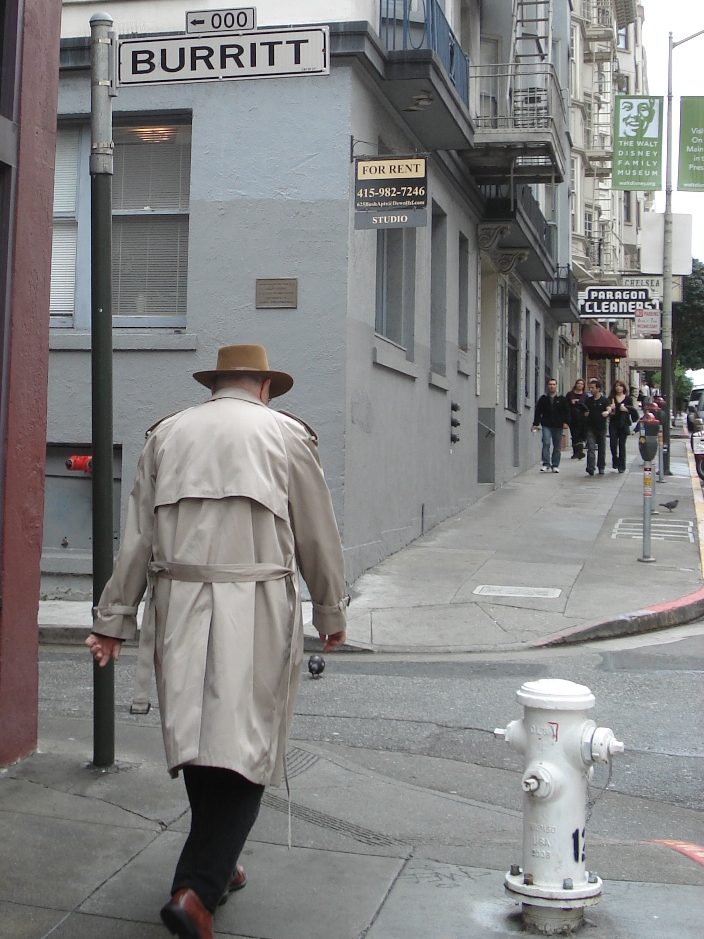
Ridley is the guy who interviewed me for the 2005 NPR special on Hammett — we recorded my material as we walked all over town, so you can hear some breathless moments as I do my schtick, though as I recall (I haven’t listened to it since that time) Ridley recorded his questions over in the studio so he sounds much more composed, as if we weren’t in fact climbing up hills.

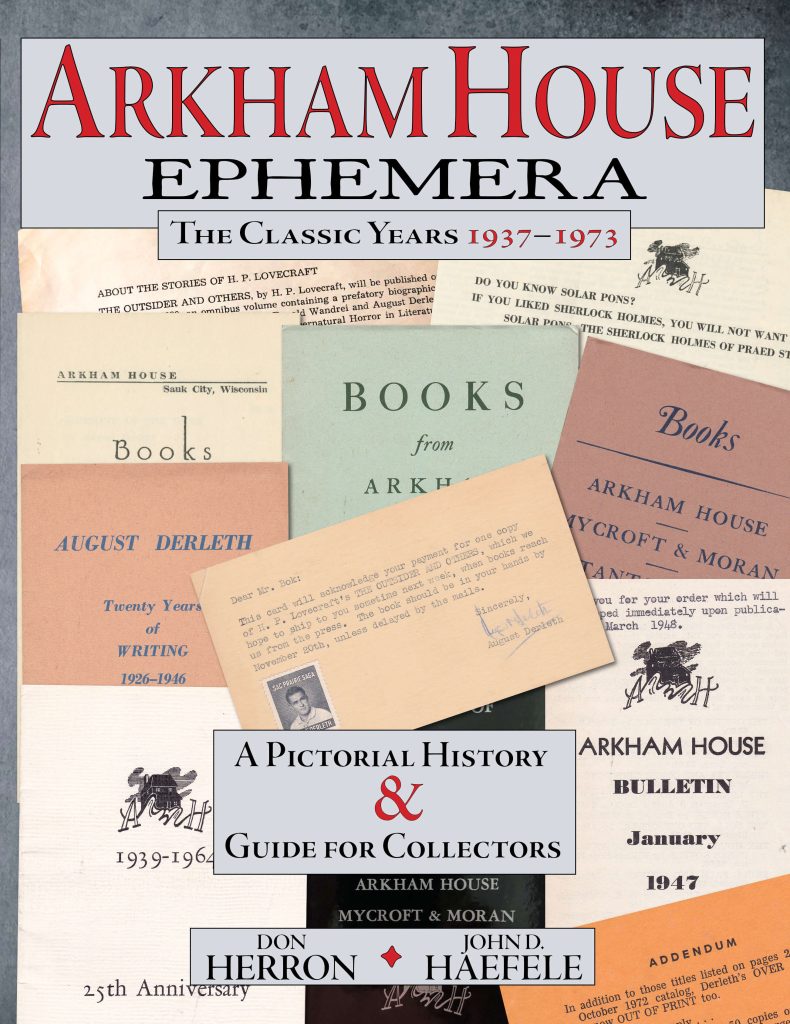
(The producer for that segment — the guy carrying around the recorder — said that my name was very familiar to him. Well, I replied, I have been doing the tour forever. No, that’s not it, he said. Eventually we figured out that he knew my name because of my series of articles in Firsts: The Book Collector’s Magazine. On Willeford. Robert E. Howard. Don Wandrei. Clark Ashton Smith. San Francisco Mysteries. Arkham House ephemera. Fritz Leiber. Floyd Salas. Those were pretty nice articles.)

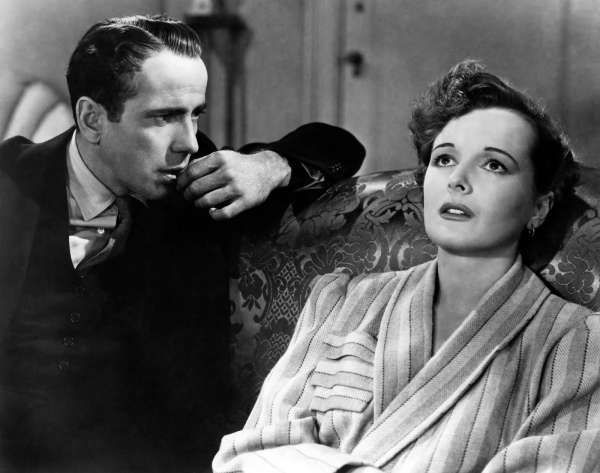
I had met Ridley a few years before, circa 2003, when I made a run down to L.A. to appear on a panel about noir — also the first time I bumped into George P. Pelecanos. I recall that Ridley and Pelecanos both thought that Sweet Smell of Success was the greatest noir movie ever, and I disagreed. Sure, it has many noir elements, it is noiresque, but it’s not noir.

I had seen Ridley’s first movie, U Turn, directed by Oliver Stone, based on Ridley’s novel Stray Dogs. Pretty good neo-noir/Tarantino-esque black comedy. (My fave aspect was the reunion of Nick Nolte and Powers Boothe from Extreme Prejudice.) But the very last moments I found kind of weird, not really the stuff of a satisfying ending.

I asked Ridley about it as we hiked around, but he said, What else would have worked?

I don’t know, almost anything. Didn’t quite ruin the movie for me, but took a chunk out of my regard.

Still, congrats to John Ridley. A guy like Hammett with roots in crime fiction, nominated for Best Adapted — and unlike Hammett, he took home the statue.

Posted in Dash, Film, News, Tour | Tagged , , , , , , , , , , , , , , , , |

Hammett: Falcon Hits the Boards

Back in the day Hammett apparently toyed around with the idea of turning The Maltese Falcon into a play. While this one isn’t that one, how far apart could any two plays get when using the same story and characters?

Through March 9 over in Concord anyone interested in a live theatre version can check it out. A reviewer for the San Jose Mercury News liked it.

Posted in Dash, News | Tagged |

Frisco Beat: Those Theatres of Yesteryear

book-cover-2_550

Doing the bits about the Novato Theater reminded me that I’ve been meaning to blurb a Julie Lindow project for, what?, at least a couple of years. (Julie hitched up with San Francisco Noir editor Peter Maravelis during the heyday of those books getting released, and going to the wedding almost felt like doing another signing, but with more food and dancing.)

While I really began my quest to see all the Bogart movies when I was in St. Paul in 1975-76, I put most of the list to rest after returning to San Francisco in 1977, then home to many, many rep houses.

The Gateway. The Richelieu. (Gateway specialized in color movies, Richelieu b&w. Another venue I haunted screened silent era flicks.) The  Warfield (where I first caught The Wild Bunch). The Embassy. St. Francis I (downstairs) and II (upstairs).  A few from those days survive. The Roxie. The Castro. The 4-Star.

Hop over to Left in the Dark for some photos of old school San Francisco movie houses — and if you’re into collecting actual books, they’ve got info on that, too.

As I’ve said before, I’m really glad I was around for the last glory days of movie theatres and bookstores.

Posted in Film, Frisco | Tagged , , , , , , , , , , , , , |

Sinister Cinema: And the Bleak Noir Rains Crashed Down

theaterI’ve got my slideshow talk in Livermore tomorrow, after warming up with the Q&A in Novato the other day.

Wow. You can tell when you’re showing a genuine noir classic, because the sky breaks open and cold rain paints everything in shades of gray. . . .

And did it ever do the noir rain thing for the benefit for the Novato Theater. Freeways flooded — the near Biblical works, folk! I’m surprised I made it out alive.

But people showed up for the Q&A despite the weather — and I have it figured out that a few people bone up on their Qs by looking over the IMDb trivia. The idea that the Knights Templar, blurbed in the opening scroll, had disbanded circa 400 years before the Knights of St. John moved onto Malta — whose error was that?

Well, as I always say, blame John Huston — he can take it.

Hollywood always conflates names/dates/facts — they did it then and they still do it today. Got to tell the story in a couple of hours or so, not get people too confused.  And let’s face it, the term Knights Templar is pretty well known, has a nice ring to it.

But the Knights of St. John? Have you ever tried to say Hospitallers with a straight face?

Not long ago on the walk itself, a woman mentioned that The Maltese Falcon was a bad movie. Why? Because the shadow of a boom mic can be seen briefly in one sequence (I looked for it, didn’t spot it). That’s one of several technical goofs listed on IMDb, though if you think something like that completely ruins a movie, I’m guessing you don’t have very many favorite films. If any. Continuity errors, anachronisms — from top critically acclaimed titles such as Citizen Kane and Vertigo on down, pretty much every movie has them. And no one thinks Peter O’Toole actually was Lawrence, of Arabia, right? (He deserved the Oscar for the performance, I think, and it is a genuine travesty that he never got an acting Oscar — one of many.)

It’ll probably take a couple of years before the Novato Theater is renovated fully and ready to rock, but I told the committee that if I’m still alive and kicking when the day comes, I’d be happy to come back up for some kind of little film festival spotlighting Charles Willeford, who began his long career as a novelist while stationed at Hamilton Fields. They could show Cockfighter — hey, maybe Roger Corman would pop for a restored print. Miami Blues. The Woman Chaser with Patrick Warburton.

And a memory resurfaced as I watched the Falcon yet again, seated in that magical near dark, taking me back to 1975-76 when I was first getting into Bogart movies. I haven’t seen every Bogart film, but I have seen most — and I tracked them down in various rep houses in those years, not on TV, not off video or DVD.

I was talking with Donald Wandrei about the movies, maybe the Falcon proper, but perhaps the Bogie version of The Big Sleep, which I had just seen with Phil Rahman. Wandrei was a pal of H.P. Lovecraft, and co-founded Arkham House in 1939 with August Derleth to collect Lovecraft’s work in hardcovers after his death.

Wandrei started telling me about seeing The Maltese Falcon when it had opened in 1941, and how he regretted that a scene he remembered vividly was later cut. He claimed that when Gutman was explaining the shadowy history of the Black Bird that parts of the sequence actually appeared as scenes — the Knights, the pirates seizing the ship.

He swore that’s what he had seen in the first release.

Now, as far as I know, no extra scenes such as those were ever shot. The movie was on a tight budget and shooting schedule. What you see now was what you saw then.

But Wandrei with his imagination — he was just short of Lovecraft and Clark Ashton Smith as one of the major visionaries of cosmic horror to emerge from the pulp magazine Weird Tales — conjured up the images even as he watched Sydney Greenstreet relate that incantatory history devised by Hammett.

The power of words, of story. The power of cinema.

Wandrei didn’t say one word about noticing a boom mic.

Posted in Dash, Film, Lit, News, Willeford | Tagged , , , , , , , , , , , , |

Hammett: By That Sweet Neck

neck

Eighty-four years ago today the publisher Alfred A. Knopf debuted an instant classic titled The Maltese Falcon. As I always say, the sickest Valentine’s day novel ever.

Yeah, maybe I love you and maybe you love me.

This side of the scale and that side.

If they hang you.

By that sweet neck.

I wonder if someone at Knopf beat each and every post-modernist hipster to the punch in the irony department by about 80 years?

Posted in Dash, Lit | Tagged , , |

Sinister Cinema: “Hoke” Shaping Up

I’m not intending on keeping track of every development in the saga of the upcoming TV show Hoke, based on the Willeford novels — but at least it looks as if the pilot is a sure thing, because they’ve cast almost every major role. Paul Giamatti. Oona Chaplin moving over from Game of Thrones.

Something to fill the environmental niche as Justified is about to amble offstage. . . .

Posted in News, Willeford | Tagged , , , |

Sinister Cinema: After 36 Years

Jesús Ángel González López — the guy who told us all about La Cuidad Maldita, the Spaghetti Western version of Hammett’s Red Harvest — recently dropped me a note to say:

“Did I tell you I sent a DVD copy of the movie to Jason E. Squire, the original
scriptwriter who finally got to see the movie 36 years later? I feel like I’ve
accomplished something!”

Since I had never heard of it, I was thinking that movie had to be obscure — and I’m thinking if the guy who wrote the screenplay (!) had never seen it since it was released, yep, it was really obscure.

Posted in Dash, Film, News | Tagged , , , |

Tour: The Easy Way

Dashiell Hammett Tour Flyer Final

I’m hauling up to Novato for an appearance this coming Saturday, and a couple of weeks later you can track me down in Livermore.

On Sunday February 16, 2p.m. in the Storytime Room of the Civic Center Library, you’ll find me on hand to present the tour via a power point slideshow for the eighth annual Livermore Reads Together (which I guess is like a Big Read, only just for Livermore).

Instead of four hours, it’ll last about an hour or so. Instead of burning the soles off your gumshoes on the mean streets you’ll be able to sit in a chair, even fall asleep if so inclined. And it looks as if the deal is free.

Man. The notoriously brutal Dashiell Hammett Tour doesn’t get any easier than that, does it?

Posted in News, Tour | Tagged , |

Sinister Cinema: Talking About the Falcon

maltese_falcon

If you’ve got a few bucks to donate to a good cause, this coming Saturday, February 8 at 6:30p.m., the Novato Theater Film Club is showing the 1941 version of The Maltese Falcon — the classic version. The good cause: saving and renovating the Novato Theater.

The fundraiser asks $15 from members of the film club, $20 for non-members, with the event to be held in the Key Room of Homeward Bound of Marin, 1385 North Hamilton Parkway in Novato.

In addition to the film (though you don’t really need a lot on top of Bogie, little Pete Lorre and the best Fat Man ever) I’ll be there for a Q&A session on Hammett, the hard-boiled and noir genres — especially if you didn’t get enough chatter about movies during the recent Noir City run in the Castro Theatre, hey, there’s lots more to be said.

And if the Q&A doesn’t cover what you want to know, I’m hanging around for a general mix and mingle follow-up. I, of course, like to talk with film buffs who like to talk.

(Novato might seem a trifle out-of-the-way for me, but you must remember that it was while stationed at Hamilton Field in that city with the Army Air Corps that no less than Charles Willeford finally sat down and began his career as a novelist — if I can assist that burg as a nod to the ghost of Willeford, I’m happy to do it. And I truly regret the passing of the old theatres of yesteryear — the theatres and the bookstores. Yeah, smart phones and tablets are more compact, but not half as much fun.)

Posted in Dash, Film, News, Willeford | Tagged , , , , , , |

Sinister Cinema: Too Late for Tears

Too-Late-for-Tears_x304bAnother year of Noir City — without the usual bleak noir rain — opens in the Castro Theatre tonight, with a specially restored 35mm print of the Roy Huggins film Too Late for Tears.

Dennis McMillan and I were thinking about sitting in on that one, but various complications ensued. We’ll have to catch it later on, somewhere. . . .

Dennis ranks Tears (at least at this moment in time) as one of the top ten noirs, and wanted to catch it — in large part because his old friend, pulp and screenwriter Howard Browne, was “instrumental in the book’s genesis, when he received the unfinished manuscript for the book from Huggins, who told him he had no idea how to wrap up the complicated plot.”

Browne wrote Huggins a five-page letter detailing point-by-point how he “should rewrite the novel to make it saleable, which Huggins did.”

Browne received the rewritten and completed manuscript from Huggins a month or so later. He told Dennis the ending was “still lost in a welter of words.”

So Browne rewrote the last two chapters himself, sent the manuscript back to Huggins, who then polished them up in his own language — and the book appeared in 1947. The movie followed in 1949.

Huggins returned Browne’s favor in 1953 by inviting him to “forget his job as editor of the Ziff-Davis pulp line and come out to Hollywood and make some real money.” Browne ended up writing for Cheyenne, Combat, Mission: Impossible and other Huggins productions — finishing his Hollywood career as a “script doctor” on The Rockford Files.

(You’ll find Dennis blurbing the Browne/Huggins relationship on p156 of his interview in the noir issue of Contrappasso.)

Posted in DMac, Film, Frisco, News | Tagged , , , , , |