Rediscovered: E. Hoffmann Price

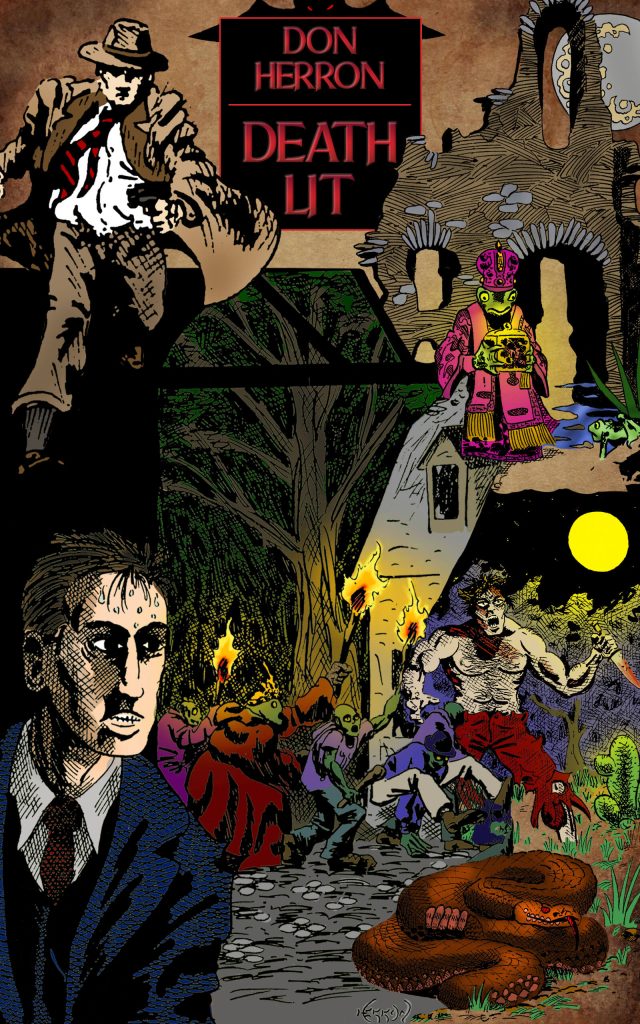
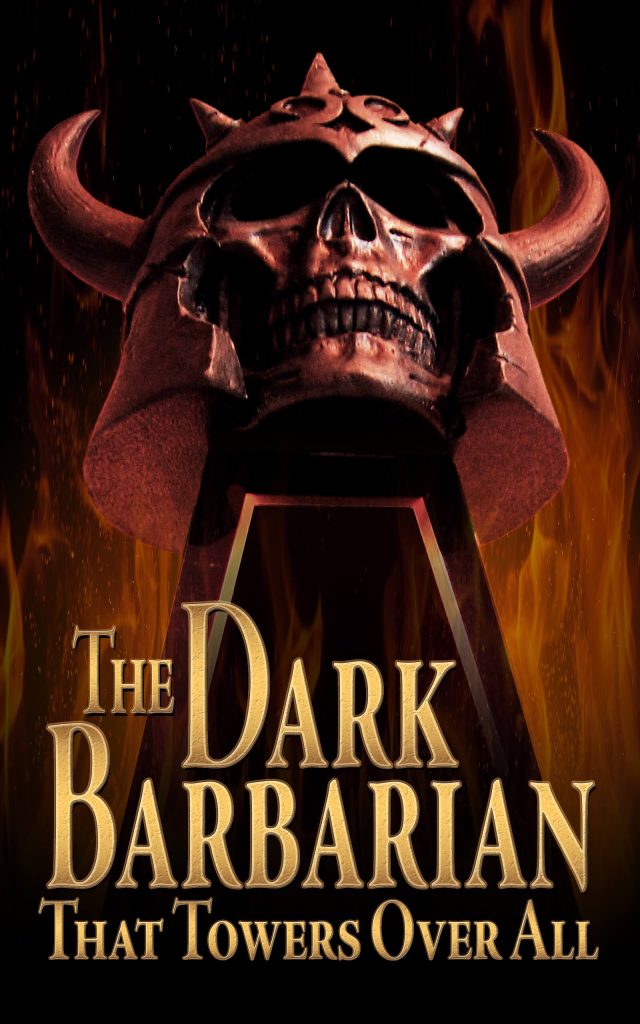
Will Hart has been piling up a Visual-Bibliography for the prolific pulp fictioneer Edgar Hoffmann Price on Flickr — photos, colorful magazine covers, some stories and letters. If you’ve gumshoed along on the Hammett tour, chances are good that you’ve heard me mention Ed Price as a pulp writer of my acquaintance. One of the fast writers on the typewriter, with around 600 tales populating the pennies-a-word pulp jungle.

“I knew Ed in the late 70’s and early 80’s,” Will tells me, “and I have always felt bad that most people only knew of him as a Weird Tales writer and because of his having contributed the original story that became ‘Through the Gates of the Silver Key’ by H. P. Lovecraft and E. Hoffmann Price.”

It is true that his association with Lovecraft — and with Robert E. Howard and other regulars in the crew writing for Weird Tales — continues to be Ed’s main claim to lasting fame, overshadowing his writing for Argosy and other markets of the day. But it is an association that ought to keep his name kicking around for as long as I can project into the future. Plus, how cool: the only person who met both Lovecraft and Howard in person.

Will promises “a visual treat for anyone that takes time to look through” the site, and if you’ve never tried to interface that era and type of writing, Ed’s career is as good an entry point as any and a lot more interesting than most. Weird fiction, westerns, adventure, spicies — a crash course in pulp.

Posted in Lit, News, REH, Tour | Tagged , , , , , |

Hammett: Only Four to Go

Terry Zobeck followed through on his plan to hit the Library of Congress in search of pure texts for Hammett stories, and cut the list of seven missing texts down to only four. Plus he copied various other items for research and reading purposes — he’ll still need to track down the original publications for his own collection (Terry was telling me that he has more of the original pulp appearances of Hammett and Chandler in his trove than UCLA does in holdings famed for the strength of the Black Mask run).

For those web surfers who’ve been following this quest, here’s Terry:

First thing in the morning I photographed the three issues of Black Mask in the rare book room. I got the covers, table of contents, and the stories. I won’t be winning any awards for my photography, but I can read everything just fine. So, over the next month or so, I’ll be writing these up.

Then I got photocopies of all five pieces Hammett did for Western Advertising — these are rather interesting. One of them is actually a book review — an omnibus review of the most important books in the advertising field for 1927. Others provide insight on his philosophy of writing. It’s interesting how he threw himself into the advertising business when he turned away from fiction writing. It wasn’t just a job; these articles show he was thinking about the nature of advertising copy.

I also got the third book review from The Forum — “Genius Made Easy.” Perhaps the most interesting item is “Vamping Samson” from the May 9, 1925 issue of Editor. It is an article on how he came to write “Ber-Berlu,” the most extensive writing he ever did on how he produced a story. Too bad he didn’t choose an Op story for this exercise.

And I was able to fill in the blanks for all but one of the New York Evening Post book reviews; you’ll remember that there were five for which the scans from that New York website were illegible in spots.

These are all items I’ve been hunting for many years. I still need to get the originals, but its nice to finally be able to read them. The Western Advertising issues are especially nice. The covers are beautiful pieces of art — it’s too bad the LOC doesn’t have color copiers for the public.

I think the only things I’m missing are the four remaining stories for which we need pure texts, the serialized versions of the first four novels from Black Mask (I have some parts of each, except for Red Harvest), the poem “Caution to Travelers,” a few letters to the editor, and one of his political pieces from 1939 (I have a couple of leads for getting a photocopy of that).

It’s all about the hunt.

Posted in Dash, Lit, News | Tagged , , , , , , , , , , |

Frisco Beat: Mustang Sarah

Nothing else came up, so as far as I know I sat around and watched each and every episode of Alcatraz through the season finale — and my opinion stayed the same the entire run. If it comes back in a few months, I might watch some more, if it had gone belly-up a few weeks ago, hey, another one bites the dust.

But other than becoming another footnote to the legend that is Alcatraz, I guess this show might get some rub-off classic status just for the car chase filmed in homage to Bullitt in the closer, and sponsored by Ford. Yeah, it’s like a commercial, but we all know that they usually pour more loot into a commercial than to anything else they film, and you can see the payoff here. They got enough funding to return to the actual streets of San Francisco for most of the chase. They’re showing off the cars and what they can do when you punch it, baby.

Mustang vs. Charger.

I Left My Hubcap in San Francisco.

A really nice chase sequence. If you want to watch the action and a short doc about filming it, hop over to the Legends of Alcatraz page fast, in case the show gets cancelled and the footage goes away.

I am kind of amazed that in the clips they have up no one mentions that the chase is in tribute to Bullitt, though it’s not like they were keeping it secret. Choice homage, from the buckling of the seat belt in the intersection of Chestnut and Columbus and ripping up the hill, to using Taylor Street again for the big jumps, to plowing around the tight corner of Francisco at Larkin where the Charger loses a hubcab in Bullitt and Steve McQueen wipes out and takes a camera with him. Note for note, letter-perfect for as much of the chase as they did.

And if you’re looking for deeper meaning, a nice counterpoint to the convicts from 1963 reappearing in modern day Frisco — a 60s Mustang fastforwarded to a new Mustang.

And, of course, my favorite bit: the VW Bug that appears a couple of times, first when they’re roaring north on Leavenworth at Francisco and then again in the Taylor Street jumps. Very nice bit. Shot twice, on different streets, whereas in the original the Bug pops up a couple of times courtesy of different cameras mounted in the cars and on the side streets, but doing the same thing (a flaw, but the first time you see the chase on the big screen you won’t notice — as I said, a very perceptive nod to the original, “correcting” that bit).

Anyway, make sure to watch the chase. A footnote to the original, but it burns rubber, too.

(By the way, I met a guy once who was talking about what a big fan of car chases he was — said his favorite San Francisco car chase was in The Rock. I like The Rock, but the car chase is too over the top, the cameras too close. Yeah, superficially exciting, but nothing compared to Bullitt.

(I asked him what he thought about Bullitt.

(He had never heard of Bullitt.

(Might as well have said he was illiterate.

(Bullitt. Mustang vs. Charger. San Francisco.)

Posted in Film, Frisco | Tagged , , , , , , , , |

Mort: Willeford, Year 24

And if I’m doing Memorial March, and I am, let’s not forget the death of the great Charles Willeford on this day in 1988.

The past few months I have been goofing off instead of working on the revision of the book Willeford, but I’ll get it done — got to get it out if only for an evocative  cover photo by David Poller (different than the one by David used on the first edition from Dennis McMillan).

What does the photo evoke?

Cigarette smoking, of course.

The book is about Willeford.

Posted in DMac, Willeford | Tagged |

Mort: Tompk, Anniversary Three

Keeping the Memorial March theme rolling, it’s hard to believe that Steve Tompkins passed away three years ago at the age of 48. I was supposed to write some sort of long review for the upcoming issue 13 of Two-Gun Raconteur, for summer 2009 release, but instead suggested that the space be used as a tribute section for Steve, and so it was. . . . Still the best memorial to good old Tompk, so far.

There was talk about doing a collection of his ten best essays, to appear immediately, but of course that was just talk. Leo Grin also has plans to do a larger collection, which would include selections from the Tompkins fanzines released as part of the Robert E. Howard United Press Association — zines where Steve would start essays, do two or three sections, then get distracted by the next essay, and the next, plus go on and on with comments. To get the complete picture, you’d need to pull from that stuff, but editing out coherent selections might be almost impossible. I was just suggesting to Leo that he might consider doing a PDF file or DVD of the Complete Tompk Zines, let people wade in on their own, absorb as much as they want while getting the full experience.

As a gesture for this anniversary, I finally sat down and read the intro Tompkins did for the Del Rey Kull: Exile of Atlantis — “Kull, who returns the stare of Deep Time and dares the stair. . . .” Yeah, a typical Tompk pun in the first paragraph. That’s probably what stopped me the first time. There’s some good stuff in this intro, of course, and it is shorter than much of what Steve wrote, but I was thinking, If you’ve never read Robert E. Howard before, you’re not going to understand most of what he’s talking about here.

I understood it, but as I wrote in TGR I prefer leaner and cleaner than the sort of sprawling magnum opus Tompkins liked to spin out. But that’s who he was, and at age 48 he was already set in his writing ways. He could have filled up thousands more pages by now, I have no doubt.


Posted in Lit, News, REH | Tagged , , |

Sinister Cinema: John Carter of Mars

Keeping my Memorial March theme going, I caught John Carter yesterday so I could review it today — for the sixty-second anniversary of the death of Edgar Rice Burroughs in 1950. Brilliant adaptation of the source material, fast-paced, funny (I’m amazed by the reviews that call it “humorless” — come on, maybe you’re watching too many movies and are losing perspective, like poor, poor Pauline Kael when she lamented the tragic death of Indy’s monkey in Raiders — how Spielberg’s camera lingered coldly over the scene — Kael just lost it in the theatre, not understanding that it was a Nazi monkey, one of the coolest bits of all time). Anyway, I’ll echo the review Bill Crider gave it and say don’t trust the establishment critics, trust us genre fans and catch it on the big screen. If you like ERB, they nailed it.

Yeah, for whatever reason — the ad campaign, not calling it John Carter of Mars — the movie isn’t performing up to expectations, and the worst fallout from that may be that they never make the next one, Gods of Mars, the most relentlessly paced novel I’ve ever read — like buckling yourself into a rocket sled and disengaging the brake. Fritz Leiber did a magnificent homage to that adventure in his Hugo-winning novel The Wanderer, which starts off slow — the first thirty or forty pages have you worried it’ll never get going — then he slams on the gas in a wild tribute to ERB and John Carter.

If you need a quick thumbnail to judge my opinions by, I didn’t think Cowboys and Aliens was that good (it was okay, but for me “okay” isn’t a real plug). I think Aliens is one of the best action movies ever done (and I’m not the only one). I saw the first Star Wars films as they came out, felt they hit the peak with Empire, hated the Ewoks, and reluctantly went to Phantom Menace in the theatre — yeah, it had some okay scenes, but what a dog, I didn’t go see the next two and only watched a few minutes of them on TV years later.

John Carter, great movie. Maybe it’ll take some time for people to recognise it, but not me. I was on it.

Posted in Film, Lit | Tagged , , , , , , , , , |

Hammett: Kidnappings in “Death and Company”

Once upon a time I rated “Death and Company” as one of the lesser and least interesting Op stories. Then Terry Zobeck dug up missing lines from the pure text, which led me to a sudden revelation, bumping “Death Co” from bland to a What the Hell??? level instantly. Now Terry returns with some other angles concerning true crime and how involved Hammett may have been in textual changes, ratcheting “Death” even higher up the ladder. Here’s Terry:

Hammett often is recognized for the realism of his fiction. One of the ways he achieved this realism was to work references to actual crimes into his stories. As a former Pinkerton agent he was something of a student of crime. Last year, in a guest blog, Brian Leno documented Hammett’s use of a couple of real-life arsenic murders in “Fly Paper.”

Hammett did something similar in “Death and Company.” When I reread the story for my post on the pure text I tucked these references away for a rainy day. This winter hasn’t provided much in the way of snow, let alone rain, so while I await the remaining stories for which we still need the pure texts to turn up, I thought I’d revisit these actual cases.

The Op’s client — a wrong-bird named Chappell — has hired the Agency to get his wife back. She’s been snatched by an outfit calling itself Death & Company. The Op and the Old Man explain the facts of life concerning the probable outcomes of kidnappings: “We dug up the history of kidnapping from Ross to Parker and waved it in their faces.”

In his edit for the 1945 paperback The Return of the Continental Op, Frederic Dannay
helpfully added Ross’ first name, Charlie (sic), but dropped the name Parker for simply “the present.” Ross, Parker — these were notorious and sensational kidnapping cases that would have been well-known to Hammett’s readers at the time, but which have faded into the shadows of history today.

Charles (Charley) Ross was four years old when he was kidnapped while playing with his older brother, Walter, in their front yard in an upscale Philadelphia neighborhood on July 1, 1874. The boys were abducted by two men who enticed them into their carriage with offers of candy — allegedly the origin of the parental admonition to not accept candy from strangers. Walter was sent into the candy store after which the carriage with Charley sped away; he was never seen again.

No one was ever convicted of the crime. Charley’s father wrote a book about the case — The Father’s Story of Charley Ross, the Kidnapped Child — and the family continued to look for Charley for the next 50 years; at one point the Pinkertons were involved in the case.

The case of Marion Parker would have been fresh in the minds of Hammett’s readers in November 1930 when “Death and Company” was published in Black Mask. William Edward Hickman abducted the 12 year old Los Angeles girl on December 15, 1927. We often think that life was simpler and safer in the past and that such a horrific event as the brutal and vicious murder of a child couldn’t have happened. Marion Parker’s murder puts the lie to that bit of rose-colored nostalgia.

Hickman abducted Marion from her school by claiming her father was ill and that he sent Hickman to bring the girl home. Hickman extorted $100,000 from the Parker family, but he did not release Marion. Rather he savagely killed her and dismembered her body. He was caught quickly, after foolishly spending some of the ransom money.

During his trial, he was one of the first defendants to try California’s new law — pleading
not guilty by reason of insanity. The jury didn’t buy it. Hickman was convicted and on October 18, 1928 he was hanged.

The story has a weird footnote. During the same year Hickman was executed, novelist Ayn Rand began to plan a novel to be called The Little Secret, suggested by Hickman’s crime and trial. The novel was never written but Rand left behind notes on it that included her thoughts on what Hickman’s experience suggested to her, “The first thing that impresses me about the case is the ferocious rage of a whole society against one man. No matter what the man did, there is always something loathsome in the ‘virtuous’ indignation and mass-hatred of the ‘majority.’… It is repulsive to see all these beings with worse sins and crimes in their own lives, virtuously condemning a criminal.  . . .” (It’s probably best the book was never written.)

In an earlier post I noted that Dannay appeared to rely upon the syndicated versions of some of Hammett’s stories from newspapers of the 1930s for his collections, including “Death and Company,” reprinted in the June 27, 1937 issue of the Washington Post. For the paper, Marion Parker’s case again was dropped in favor of a more recent kidnapping, that of Alice Speed Stoll, abducted from her Lexington, Kentucky home in October 1934. A $50,000 ransom was paid and Alice was freed six days later in Indianapolis. The accused was 22-year old Thomas H. Robinson, a former inmate of a mental institution. His wife also was implicated in the crime. The case was quite sensational at the time, not least because Robinson allegedly was a transvestite.

Presumably, an anonymous editor at King Features fiddled with the short list of famous kidnappings. Then again, this editing for syndication raises the question as to what extent Hammett may have been involved in the revision of his stories for newspaper publication. It does seem odd that the King Features’ editor would bother to make such an apparently inconsequential change. However, Hammett might have wanted to update the listing of kidnappings with a more recent example for the sake of realism. The Stoll case was covered by the national media; it certainly would have still been in readers’ minds in 1937.

Posted in Dash | Tagged , , , , , , , , , , , , |

Sinister Cinema: Who’s Got the Posters?

You may have heard about the neat little trove of old movie posters that turned up recently. My occasional Guest Blogger Brian Leno just brought to my attention that the haul includes the only known original for the 1931 Falcon starring Ricardo Cortez, as above. Gee, what a sweet little love yarn!

Posted in Dash, Film, News | Tagged , |

Mort: HPL, 75 Years Ago Today

How about another chunk out of the long essay “Conan the Argonaut” by me and Morgan Holmes to commemorate the seventy-fifth anniversary of the death of H. P. Lovecraft? Straight from the word doc, pretty self-explanatory:


After the First World War, paper shortages and printers’ strikes caused costs to go up, and the two Munsey titles Argosy and All-Story also merged to form Argosy-All Story Weekly beginning with the July 24, 1920 issue. This shakeup led to Munsey letting Davis go, although he would return shortly — Davis actually plotted Tarzan and the Ant Men in order to get Edgar Rice Burroughs to write another Tarzan novel, which first saw print in the pages of Argosy early in 1924.

In this turbulent era of the original pulp, Robert E. Howard became an Argosy
reader. Howard told Lovecraft in 1933 that the first time he read a fiction magazine, a copy of Adventure, he was fifteen years old and got the issue in the summer after “I moved into town.” The Howard family settled in Cross Plains, though, in October 1919 when he was only thirteen. If his age was actually fifteen, the year would have been 1921. Given that he remembered reading the magazine from before the merger with All-Story in 1920, fifteen appears to be a misstatement.

Found among Howard’s papers was a list of authors from Adventure with story titles in brackets, including a Talbot Mundy yarn from the September 1, 1919 issue, which better matches the time period of the move to Cross Plains. Howard was probably thirteen when
he began reading pulp magazines, the typical age young men encounter adult fiction. After first discovering Adventure, somewhere between September 1919 and July 1920 the boy who would create Kull and Conan started buying Argosy.


III.
Lovecraft

Howard followed in the steps of H. P. Lovecraft, born in 1890 and over fifteen years his senior, who was a devoted reader of the Munsey pulps during his own youth. The Necronomicon Press chapbook Uncollected Letters presents a brief comment by Lovecraft on the Irvin S. Cobb story “Fishhead,” obviously an influence on his own writings, sent to the editor of The Cavalier circa January 1913. A much longer letter addressed to
the editor of The All-Story Weekly circa February 1914 opens with this comment: “Having read every number of your magazine since its beginning in January, 1905, I feel in some measure privileged to write a few words of approbation and criticism concerning its
contents.” Lovecraft mentions reading the Burroughs novels Tarzan of the Apes and The
Gods of Mars
and decides, “At or near the head of your list of writers Edgar Rice Burroughs undoubtedly stands.” In addition to many other authors referenced in passing, he states that “I have read every published work by Garrett P. Service, own most of them, and await his future writings with eagerness.” Service, a professional astronomer, was one of the pioneer authors of modern science fiction featured in the Munsey magazines. And in an April 16, 1935 letter to the fan and fellow Weird Tales contributor Richard F. Searight, Lovecraft notes another Munsey title, Railroad Man’s Magazine, writing “I followed that fascinating, red-covered periodical from its start to its finish” — a span of years from 1906 to 1919.

Lovecraft’s reading of the Munsey pulps and his letters to All-Story Weekly are well chronicled by science fiction historian Sam Moskowitz in his 1970 book Under the Moons of Mars: A History and Anthology of “The Scientific Romance” in the Munsey
Magazines, 1912-1920.
Moskowitz quotes from a Lovecraft letter published in The All-Story Cavalier Weekly for August 15, 1914, commenting on the recent merger of the titles: “Many writers, familiar and unfamiliar, good and bad, come from The Cavalier to the readers of The All-Story. Out of these I trust the best will be permanently retained, and
the others gradually eliminated. The greatest benefit derived from the amalgamation undoubtedly will be the return to The All-Story of George Allan England, who, to my mind, ranks with Edgar Rice Burroughs and Albert Payson Terhune as one of the three supreme literary artists of the house of Munsey. Mr. England’s Darkness and Dawn trilogy is on a par with the Tarzan stories, and fortunate indeed is that magazine which can secure as contributors the authors of both. Other Cavalier authors of extreme merit are Zane Grey, whose novels of the West have such a fund of graphic local color; and Edgar Franklin, whose stories, both serious and humorous, have so long entertained the readers of the Munsey magazines. . . .”

That this future star of Weird Tales would have read Burroughs and George Allan England is not a surprise, but the mention of Zane Grey and Albert Payson Terhune, famous as a
writer of dog stories, breaks any stereotype a novice fan might have of Lovecraft as a fantasy purist — clearly he read all the content in several runs of the Munsey fiction magazines. In his H. P. Lovecraft: A Life from 1996 S. T. Joshi followed Moskowitz by over two decades with a truncated account of Lovecraft surfacing in print in the Munsey letter columns. Out of the legion of highly subjective comments Joshi tossed into his narrative, one is especially — if inadvertently — humorous: “This is an appalling amount of popular fiction for anyone to read.”

If Joshi seems to miss the tremendous bedrock educational value provided by the Munseys for a writer of popular fiction such as Lovecraft, still he recognized the pivotal role Argosy played in his subject’s life and career. In a letter to the September 1913 issue of The Argosy the twenty-two year old Providence native attacked the romance stories of Fred Jackson featured in the magazine, setting off a debate in the letter column that would last over a year — and leading to an invitation on the side for Lovecraft to enroll in the amateur journalism movement. As Joshi states: “It is worth reflecting on what the whole Argosy/All-Story battle over Fred Jackson meant to Lovecraft. In a sense we owe thanks to Mr Jackson. . . for making the rest of Lovecraft’s career possible, for there is
no telling how long he would have continued to vegetate in the increasingly hothouse atmosphere of 598 Angell Street.”

The debt the magazine Weird Tales owes the Argosy letter columns perhaps is even
more incalculable, since the amateur journals gave Lovecraft the excuse to exercise
his formidable talent for tales of atmospheric horror. Before the premiere issue of Weird Tales hit the newsstands in March 1923, Lovecraft had published no less than twenty-five
stories and vignettes — at that very moment “The Lurking Fear” was appearing serially in Home Brew. Among the tales that had seen print you may count “The Statement of Randolph Carter,” “The Cats of Ulthar,” “Nyarlathotep,” “The Doom That Came to Sarnath,” “The Picture in the House,” “The White Ship,” “The Music of Erich Zann” and “Herbert West — Reanimator.”

Edwin Baird, the first editor for Weird Tales, eagerly accepted a batch of five stories submitted by Lovecraft, including “Dagon” which originally had appeared in the amateur press publication The Vagrant for November 1919 — “Dagon” would be the author’s first
professional appearance in the magazine in the issue for October 1923. As L. Sprague de Camp reports in Lovecraft: A Biography from 1975, “Of the eleven issues of Weird Tales from October, 1923 to February, 1925, Lovecraft appeared in nine, once with a poem and the other times with stories.”

Worth note is that before submitting “Dagon” to Baird in his Chicago offices, Lovecraft had tried it on another magazine, thought to have been Black Mask, which began publication in 1920. Even as his initial group of submissions was being readied for appearance, in August and September of 1923 Lovecraft was creating a new tale of horror titled “The Rats in the Walls,” which he submitted not to Weird Tales — but to Argosy All-Story Weekly!

In a November 8, 1923 letter to Frank Belknap Long, Lovecraft mentioned “the professional rejection of this piece by R. H. Davis, Esq. of the Munsey Co. . . . tho’ admitting it hath some merit, holds it too horrible for the tender sensibilities of a delicately nurtured publick.” He told Long that he was sending the story on to Baird that
very day. In 1930 he said in a letter to Clark Ashton Smith, “I must try the Argosy some day, though I gave up the Munsey group in disgust when the celebrated Robert H. Davis turned down my ‘Rats in the Walls’ as ‘too horrible and improbable’ — or something like that — some seven years ago.”

In the game of What If? a world where Davis also had recognized Lovecraft as a major
talent who would flourish and last the long years along with an O. Henry or a Conrad and achieve a standing in literature that a “Max Brand” could never hope to see is quite intriguing. If Lovecraft had been able to abandon the fledgling publication Weird Tales in favor of the powerhouse market of Argosy, would Weird Tales have lasted long enough
to provide Robert E. Howard with a home for his own first batch of stories?

To his great credit, Baird was wildly enthusiastic over “The Rats in the Walls” and rushed it into print in his March 1924 issue. The addition of Lovecraft to the roster of contributors was the major coup for Baird. Before “Dagon” in October 1923, what did the magazine have to offer? Editorial assistant Otis Adelbert Kline, later known for closely imitating the interplanetary romances of Edgar Rice Burroughs, had some fiction. Chicago resident Vincent Starrett, a brilliant writer of books-about-books but an indifferent fictioneer, contributed two stories. Clark Ashton Smith placed two poems in those pulp pages, and reprints by Poe and Bierce also added literary value. The cornerstone for the mythic reputation of Weird Tales, without question, was and is H. P. Lovecraft.

In the six issues of the magazine before the exciting advent of Lovecraft, one of the most prolific contributors was Baird’s second editorial assistant, Farnsworth Wright, who
provided no less than four stories: “The Closing Hand,” “The Snake Fiend,” “The
Teak-Wood Shrine,” and “An Adventure in the Fourth Dimension” — with nothing
close to “The Rats in the Walls” among them. After the first thirteen issues Wright would succeed Baird as editor of the pulp, and while he achieved certain high points — the discovery of Robert E. Howard paramount among them — in many ways he dropped the ball that Baird had set rolling. Whether Wright was jealous of Lovecraft’s far greater talent may never be known, but his fickle editorial policies baffle fans to this day. He initially rejected Lovecraft’s “The Call of Cthulhu” only to be talked by Donald Wandrei into looking at it again, and completely passed over “At the Mountains of Madness” and various other stories, derailing Lovecraft from the apparent fast track for his fiction that Baird so clearly had set down.

In his letters Lovecraft sometimes mentions Wright favorably, but the frequency of negative appraisals is staggering — as in a September 18, 1930 letter to Lee Alexander Stone, where Lovecraft wrote, “Your fellow-trencherman Bernard Dwyer lately heard from the W.T. author Henry S. Whitehead, who says that Wright uniformly rejects his best stories. Very like Wright—whose bland dumbness transcends my utmost limits
of comprehension.”

In 1927 the Popular Fiction Publishing Company, publishers of Weird Tales, entertained the idea of releasing what would have been the first book collection of Lovecraft’s tales. That prospective title did not appear, but they did issue The Moon Terror and Other Stories that year, apparently ghost-edited by Wright, a hardback using fiction reprinted from the magazine. The title story by A. G. Birch is backed up by “Ooze” by Anthony Rud, from the very first number of Weird Tales, “Penelope” by Vincent Starrett and “An Adventure in the Fourth Dimension” by Wright — one of the most lackluster collections of all time, this book became a perennial offering in the pages of Weird Tales and finally sank to the status of a free bonus for fans subscribing to the magazine. No one can say with certainty that the proposed Lovecraft collection would have sold better in that era than The Moon Terror, but all things being equal, today a Lovecraft book from 1927 would be worth thousands of dollars a copy whereas the Wright collection only attracts casual interest from completist collectors of Weird Tales.

A November 4, 1935 letter to Richard Searight offers one of Lovecraft’s most poignant summations of having Wright as an editor and Weird Tales as almost the only contemporary market open to the type of fiction he was writing:

Glad your Chicago visit was pleasant. I have no doubt that Wright is a delightful & congenial chap, though his capricious editorial policy does give me a large-sized cervical pain! He has consistently turned down my best work (though I no longer send to him) on the ground of length, while at the same time taking far longer things (for the most part utter tripe) from others. It is clear to me that he does not like my work, no matter what he says to the contrary. He might be willing to condescend to take short pieces, but (though accepting such from Kline, Bernal, & everybody else) draws the line at long pieces. Well — he can go to hell for all of me — though I suppose I may some day shoot him some odds & ends if I ever get writing in quantity again & have a plenitude of left-overs. His financial policy, too, is not very encouraging. Wandrei thinks the magazine is hard hit — so I wouldn’t criticize Wright if he shared the losses (as respects his salary) with those whose work makes the magazine possible. But they tell me he still draws his full salary on time! Glad to hear you’ve received a cheque for April contributions. That means, I trust, that my client Mrs. Heald will get paid for the “Out of the Æons” which I ghost-wrote — & she promised to pay for the job as soon as Wright paid her. I could use that cash right now to splendid advantage!

In a year and a half after writing that letter, Lovecraft would be dead and the Golden Age of Weird Tales would be over.

Posted in Lit, REH | Tagged , , , , , , , , , , , |

Hammett: On the Trail

Remember the Alamo!

Meanwhile, Terry Zobeck is hot on the trail of the last few Hammett stories he wants to check, to make sure we have the best texts — the pure texts — when we slip off our gumshoes and plop down in the easy chair for a hard-boiled reread.

Terry began his quest last year, and managed to cut down the list of stories needed within mere months. Now he says, “A few weeks ago I contacted the Library of Congress to see if they had any of the pulps with Hammett stories that we need for the pure text project in their rare book collection, and if so, whether they had been digitized or were otherwise available.

“I heard back within a few days that they did indeed have three of the seven we need (The Vicious Circle BM 6/15/23; Night Shots BM 2/1/24; and Afraid of a Gun BM 3/1/24). However, they have not been digitized or otherwise copied. They are quite fragile and therefore cannot be photocopied.

“I wrote back and suggested I could photograph them if someone were to
carefully hold them open, much like my daughter and I did for ‘This King
Business.’

“I got no response until this morning. The staffer I had communicated with called my home number this morning and spoke with my wife. I called him back a few minutes ago and he has arranged for me to come in and photograph the three stories. I need to check my calendar and propose a few dates, but sometime soon I should have them.

“I also need to check UCLA’s holdings; I seem to recall they have a substantial collection of pulps. Bowling Green in Ohio is another possible source.

“Now that I’ve got my teeth into this, I won’t stop until we’ve got them all.”

Posted in Dash, Lit, News | Tagged , , , , , , |