I’ve never read Hugh Pendexter, but Robert E. Howard did.
In a 1931 letter to H. P. Lovecraft, Howard heaps praise onto Pendexter’s “Devil’s Brew,” a two-part serial that had appeared that year in the pages of Adventure.
The Texas author liked it so much he informed Lovecraft that he was going to mail the two issues to him, so he could judge for himself.
Obviously he valued the opinion of the Gentleman from Providence.
Lovecraft replied favorably upon the pulp tale, and Howard was pleased. Always nice to have a friend confirm our own literary tastes.
Pendexter, one of the giants of Adventure, is not read so much today. He didn’t write about barbarians battling sorcery or multi-tentacled creatures arising from dark oceans.
Instead, Pendexter wrote historical fiction, books about the taming of the American Frontier, and these types of yarns just aren’t much in favor with the readers of today.
But back in his time he must have been something, filling the pages of Adventure with stories so strongly based in truth that, for the edification of his readers, he would list the books or articles he had used during the creation of his story.
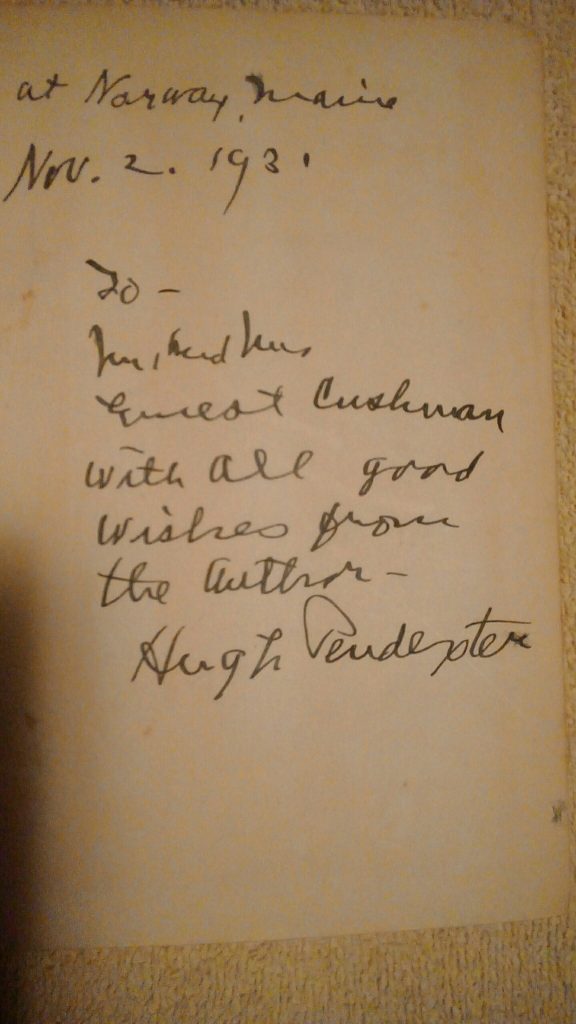
Here is his autograph, in a battered copy of Gentlemen of the North, which had appeared in Adventure in 1919. He signed it on November 2, 1931 in his hometown of Norway, Maine. A very nice example of his penmanship, even if a couple of letters are a trifle smudged.
His signature isn’t common but I have come across a few books that he inscribed, and so far they all have one thing in common. They’re all beat to crap, as if they went a few rounds with Rocky Marciano.
Either his books were tossed aside and not regarded highly — or conversely they were valued greatly, and read again and again.
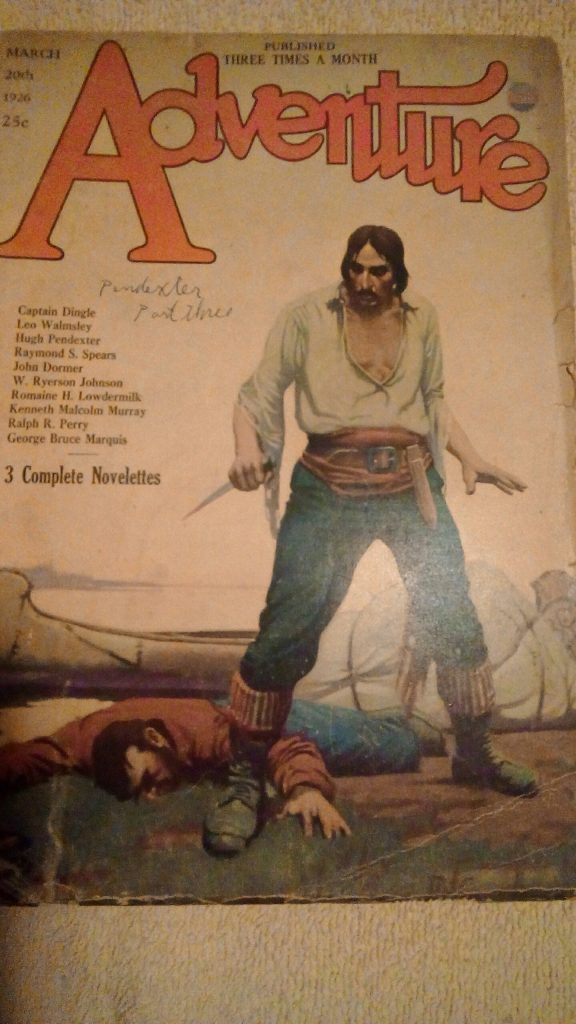
I think it’s the latter of those two, and for proof we can look at the March 20, 1926 issue of Adventure from my collection. It showcases a beautiful painting by Raphael Cavalier but a former owner has scrawled “Pendexter part three” across the cover, which does irritate me — but only a little.
On the spine of the magazine this desecration continues with the letters “HP” penned — this time neatly — into the side. How can anybody be irritated at witnessing a reader displaying such love for a favorite author?
The story inside was titled “Log Cabin Men,” and if I ever find the other 4 parts, I’ll have to give it a try.
But for now I’m going to start reading— soon — Gentlemen of the North. I just hope the book doesn’t crumble to pieces as I’m handling it.
If Pendexter was good enough for Robert E. Howard, I’ll bet he’s good enough for me.
Autograph Hound Brian Leno has been as busy collecting as ever, despite the pandemic and the lockdown, and pops in today to explain what happened to the guys on the rope.
In addition to that mountaineering moment, he reports that he “ordered a biography of the fellow who killed John Wilkes Booth, Boston Corbett. Interesting guy, very religious.
“Seems like one time he passed a couple of prostitutes and it must have excited him. Got himself home, started reading the Bible, fetched himself some scissors and castrated himself.
“With a pair of scissors.
“Apparently no one really knows of his passing, but it’s thought he died in a big fire in Minnesota.”
Among other notable acquisitions for the Leno trove he got the John Hancock of the Frankenstein play author Richard Brinsley Peake (Mary Shelley was in the audience for the premiere). The suicide or murdered Jack the Stripper suspect. Boxer Freddie Mills, rumored sexual partner to one of the Kray Brothers.
Brian says, “As with your Arkham ephemera collection they don’t take up much room. One scrap of paper and a signed small photo of Mills, getting ready to duke it out with someone. A smaller triumph was the purchase of another Freddie, Freddie Jones who played the carnival barker in The Elephant Man and the monster in Frankenstein Must be Destroyed.”
The multifarious joys of autograph collecting.
Here’s Brian to give us the scoop on the hot news of 155 years ago:
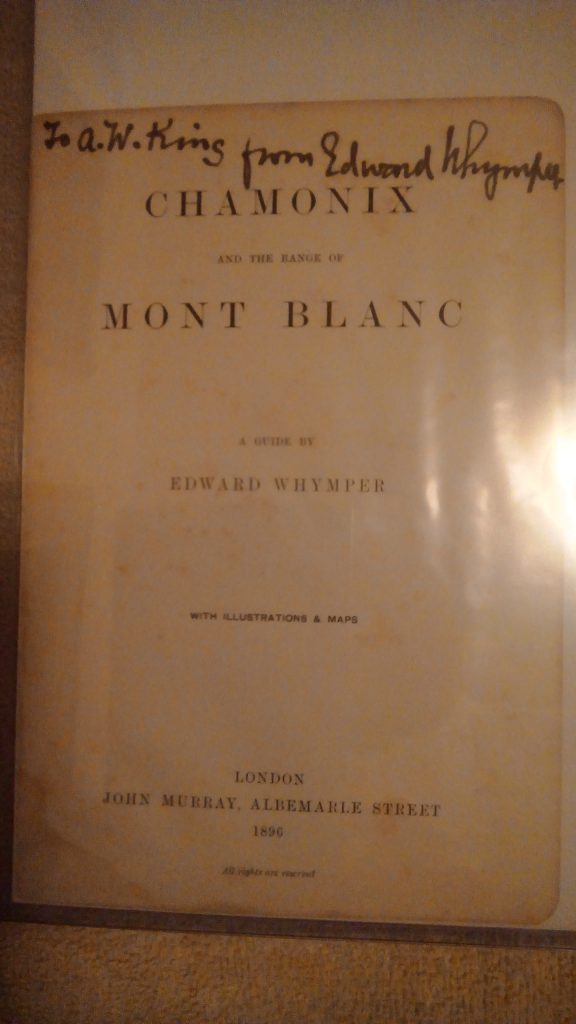
I have been to the mountain top. Just finished my own shootout for an Edward Whymper autograph, and that baby is coming to the states! I guess during the bidding you could say I started with a bang and got a Whymper. Wasn’t cheap.
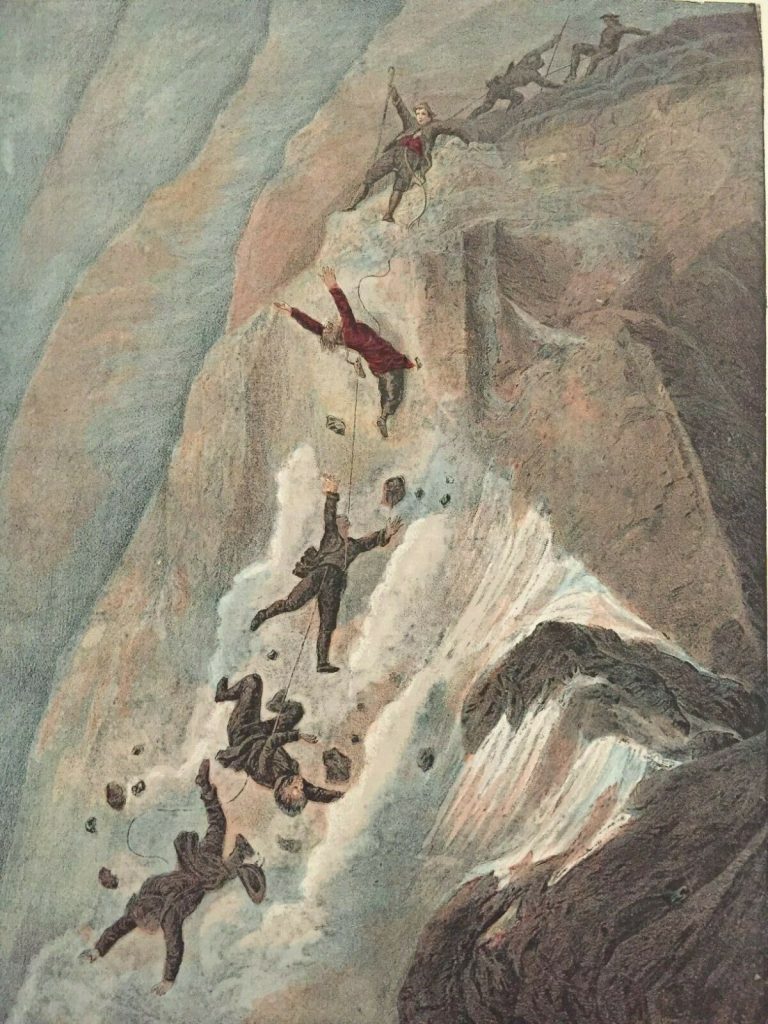
The image above captures the moment the rope broke and four of Whymper’s companions, just after completing the first successful ascent of the Matterhorn, went tumbling to their deaths. Whymper, I believe, is second from the top and the print is by the great French artist, Gustave Dore. (Coincidentally, I also have Dore’s signed business card.) The chromolithograph appeared in the March, 1867 issue of Demorest’s Illustrated Monthly Magazine, a couple of years after the event.
The auto came in a shot-to-shit copy of Whymper’s 1896 guide to Chamonix and Mont Blanc. Once I got the book, I cut the page free and framed it.
On the Dore artwork, by the way, the guy with his arms outstretched, right at the break of the rope, is Lord Francis Douglas. Francis was the brother to the Marquess of Queensbury of the sponsor of the boxing rules fame. His nephew, it would follow, was then Lord Alfred Douglas, Oscar Wilde’s boyfriend.
Of the four that perished, Douglas was the only body never found. Still not, as far as I know.
All this happened July 14, 1865. The fall off the Matterhorn occurred about two months after the end of the Civil War, to put things in perspective.
Of the incident, Whymper said, “Every night, do you understand, I see my comrades of the Matterhorn slipping on their backs, their arms outstretched, one after the other, in perfect order at equal distances. . . .”
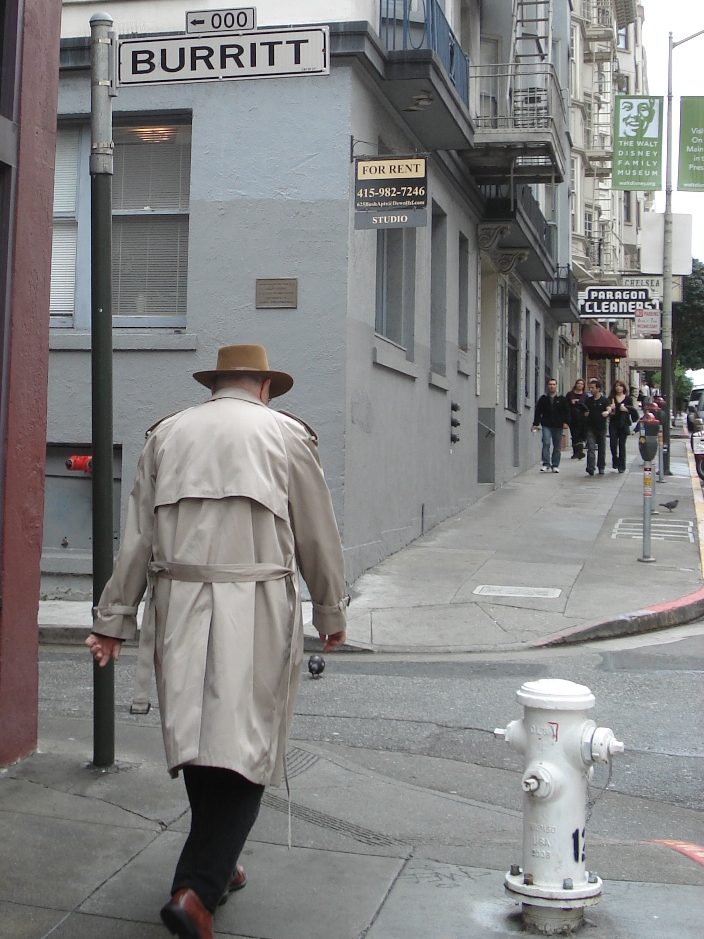
The article writer doesn’t seem to be aware of the fact that I’m the one who pushed for Monroe Street as the lane to rename, because Lawrence Ferlinghetti wanted to mark Burritt Alley for the handle Dashiell Hammett Street.
Nope, not on my watch. Burritt is mentioned by name in The Maltese Falcon. Don’t dink with it.
(The reader is left to his or her own devices to figure out that the 1988 renaming of 12 streets in honor of authors and artists covers both Hammett Street and Jack Kerouac Street, the only ones of that group surveyed in this write-up. And there’s nothing about the sordid era when the street sign was damaged, replaced, and misspelled!)
Anyway, a nice enough newspaperesque tidbit.
But heed this trigger warning: Some renaming action involves racist history.
Jeez.
Tell me, not in San Francisco!
(Or, when will they want to rename the city itself? All that shocking colonial backstory. May I suggest Dashiell Hammett Burg?)
The maelstrom of Arkham House ephemera collecting swept me up again, with John D. Haefele clinging onto the plunging raft by my side.
Some weeks that’s been all I could think about, bidding on items I didn’t have in the stash, figuring out this or that arcane permutation of the hobby. The other day Haefele and I (with strong input from Paul Dobish) determined that there exist — at least — some six variants of Item 92 from the list of Classic Era ephemera I surveyed for Firsts: The Book Collectors Magazine. Until we batted the info out, previously unknown variants, of course.
Now we know about them, but you don’t.
I’m sure the current burst of activity was inspired by Haefele stepping up with his recent survey of the Modern Era ephemera for Firsts — an essay in one issue (one of only a handful of historical presentations on modern Arkham yet done) and a list of the post-Classic Era ephemera items in the next. That sparked the dive back in.
Back into what?
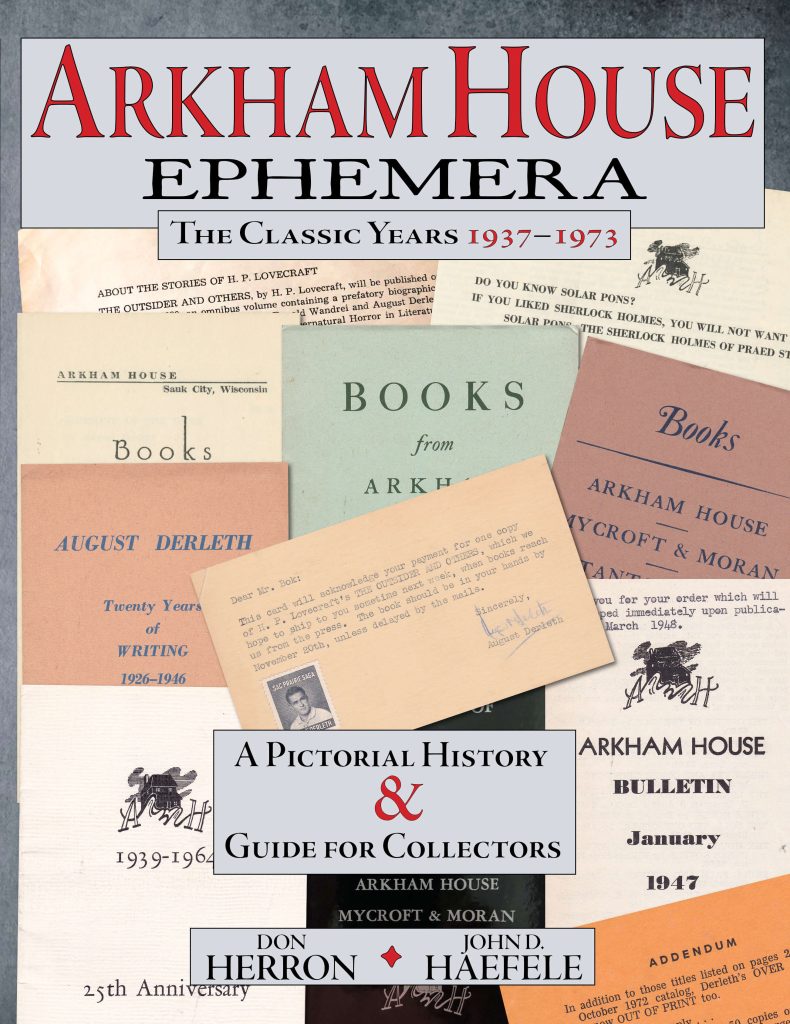
Not just the hobby itself, but into a book-length expansion of the Classic List which Haefele and I have been talking about for years — I just noticed a reference to the project in a 2007 note. The plan at the moment is to show an image of every single item, in addition to the description.
Once we get that one done, then you’ll know what we know.
I think we have roughly 50 more Classic Era items as of now to add to the 100 tallied in Firsts. And the list will expand in other ways. Haefele has persuaded me that pure August Derleth brochures — Stanton & Lee — need to be inserted where they would appear. Ditto Hawk & Whippoorwill. Sure, I get it: August Derleth was Arkham House.
And Haefele talked me into adding issues of the in-house magazine The Arkham Collector to the list.
Don’t think I’m some pushover. The magazine was sold — it is not by definition ephemera. But what Haefele pointed out was that it took over many of the functions of the various brochures, listing projects underway. If you don’t have The Arkham Collector in the record, then you don’t have the full “history” usually recorded by the ephemera.
I recall that some collectors griped that certain books — Stan McNail’s Something Breathing or Donald Sidney-Fryer’sSongs and Sonnets Atlantean— seemed to leap into print from nowhere, without significant advance notice in the flyers. But they were mentioned as upcoming in The Collector. And the envelopes with new issues of the magazine also were loaded up with contemporaneous brochures and inserts.
The Arkham Collector won’t just be dropped directly into the numbering system for the ephemera. I’ll allow it in, but each of the ten issues total will be done via Roman numerals — I, II, III through X. Hey, it’ll look cool on the page.
And we ought to be upfront about other reasons why Haefele is pushing for The Arkham Collector to assume its proper place in history.
Secrets of the past, unveiled!
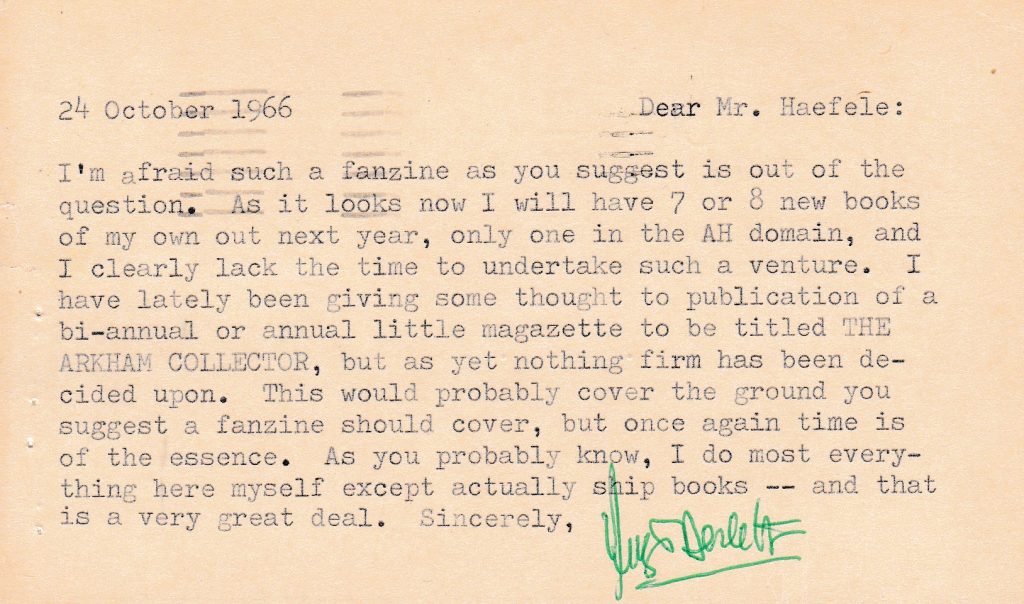
“Despite years of researching the ‘Derleth Papers,'” Haefele notes, “I’ve never uncovered any official explanation why Derleth started up the magazine — beyond the time and money considerations offered when he announced it.”
Haefele reports: “I’ve always thought (rather, hoped) that I was the young fan who brought Derleth to the tipping point when he decided to publish The Arkham Collector, which he announced in Spring 1967.
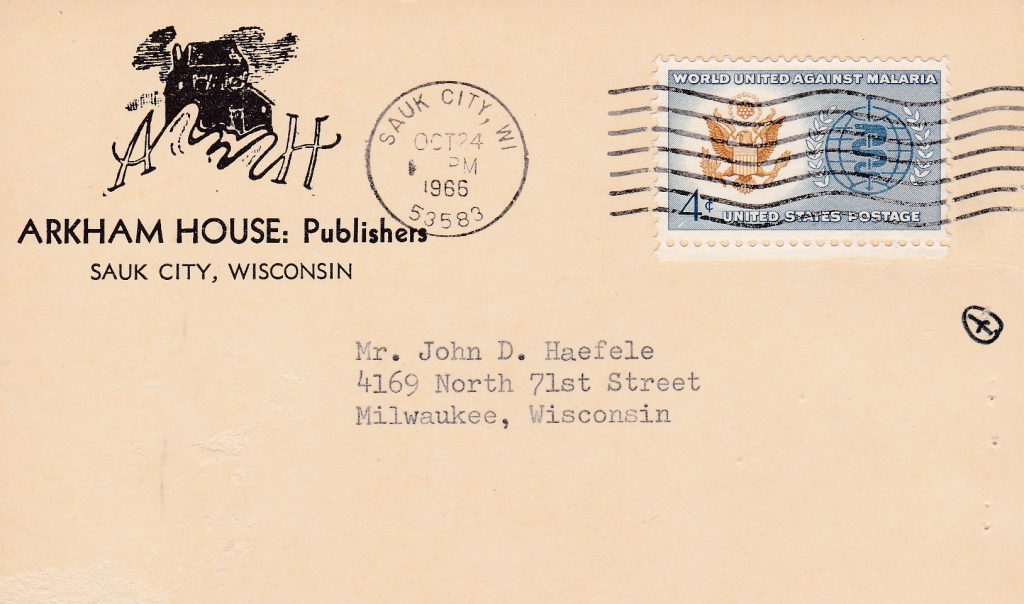
“That’s because on October 20, 1966 I had written to him: ‘I think you could publish a monthly fan-zine in which news of new books printed or going out-of-print could be presented, along with reviews and amateur writings a minimum length. The fans could pay the fee of publication and postage.’
“Derleth’s reply was dutifully sent on October 24”:
Keeping his eye on the centennial clock, noted book and pulp collector Kevin Cook returns to the Mean Streets. Here’s Kevin:
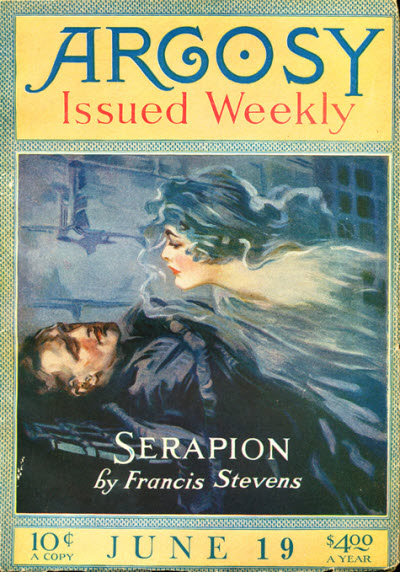
Pulp cover illustrator P.J. Monahan was born Patrick John Sullivan on January 4, 1882. When he was just a youngster his parents both died of influenza and he was raised by kind neighbors. He took on their surname of Monahan for his professional career.
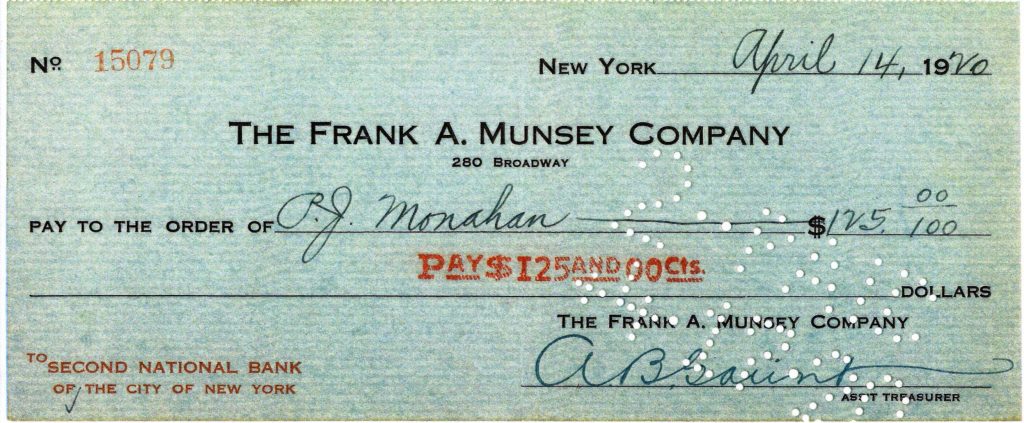
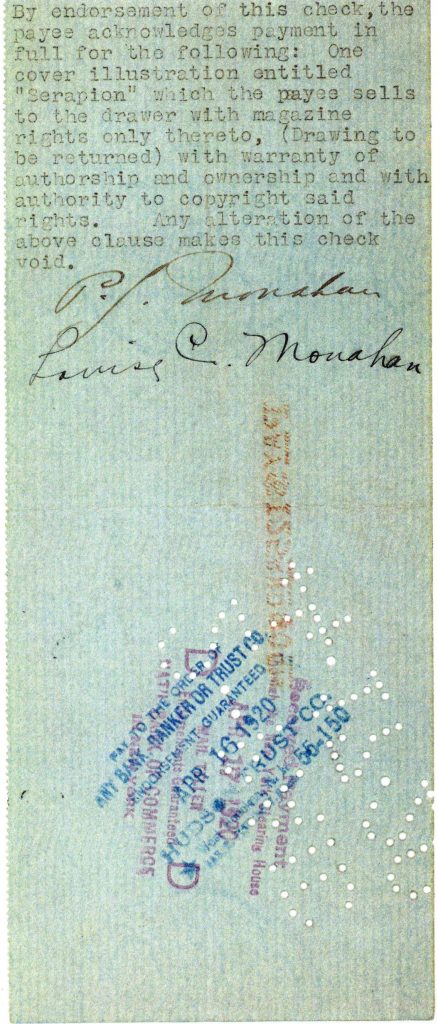
The check with his signature shown here is for the cover painting for Francis Stevens’ brilliant novel of demonic possession “Serapion” (All-Story Weekly, June 19, 1920), published exactly 100 years ago. As you can see, he was paid the princely sum of $125.00 by the Frank A. Munsey Company for his efforts.
If you could eliminate the last four paragraphs on the last page, “Serapion” would be regarded as one of the greatest noir novels ever written. But of course that was not Stevens’ intent, and I question whether it would have seen print in 1920 with the total triumph of evil.
Although he painted some beautiful covers for “Polaris — of the Snows” (All-Story Weekly, December 18, 1915) and “Land of the Shadow People” (All-Story Weekly, June 26, 1920), novels written by Charles B. Stilson, Monahan is best remembered today for the 13 cover paintings he did for novels written by Edgar Rice Burroughs from 1913-1923, and the one he did for Johnston McCulley’s first Zorro story, “The Curse of Capistrano” (All-Story Weekly, August 9, 1919).
The cover illustration for ERB’s “Thuvia, Maid of Mars” (All-Story Weekly, April 8, 1916) was subsequently used as the dust jacket on the A.C. McClurg first edition of the novel in 1920. He also produced the dust jacket painting for ERB’s The Girl from Hollywood (The Macaulay Company, 1923). Monahan died young in 1931 as a result of injuries sustained in an automobile accident.
A myth started on the internet has it that P.J. Monahan was nothing less than Edgar Rice Burroughs’ favorite Munsey artist. I checked out that idea, searching for concrete proof.
First, I contacted David Saunders whose pulp artist website probably has the best biographical information regarding Monahan. He stated that he believed that Burroughs had a “qualified preference” for Monahan, but put me in touch with Robert Barrett, the man Danton Burroughs asked to research, organize and index all of the carbon copies of his grandfather’s correspondence at ERB, Inc.
Barrett advised me that Burroughs never wrote a single letter regarding Monahan, although Munsey editor Bob Davis did gift Burroughs with the original Monahan cover painting for “Tarzan and the Golden Lion.” Apparently, a combination of the fact that Monahan painted 13 covers for Burroughs stories and the knowledge that ERB possessed that original gave rise to the idea that he was a favorite of ERB.
Also interesting to note is that Monahan’s pay rate for ERB covers increased after 1920 from $125.00 to $135.00 each. Plus, other contemporary artists like Modest Stein were only receiving $50.00 from Munsey for cover paintings, Burroughs or otherwise. By the 1930’s Munsey was paying $250.00 each for cover paintings. This information came from Bob Barrett, who has original checks for the ERB cover paintings.
And does our resident pulp/film buff John Locke have a title for you today: I Wake Up Screaming.
Yeah, we all get that feeling, right? — now maybe more so than ever.
The pulps spotted, and this particular movie, give John a chance to cover a workhorse of the fiction mag scene in the person of:
Steve Fisher (1912-80) dropped out of high school and enlisted in the Navy, perfect preparation, as it turned out, to be a high-volume pulp writer. After returning to civilian life, he published in the neighborhood of 400 pulp stories, primarily from 1933-46.
He also expanded into slick-magazine stories and hardbound novels, which made him an object of envy in pulp-writing circles.
Ever ambitious, he soon tapped into Hollywood — and the big bucks. His novel I Wake Up Screaming was published in March 1941 and quickly snapped up by 20th Century-Fox for $7,500. The film premiered on Halloween later the same year.
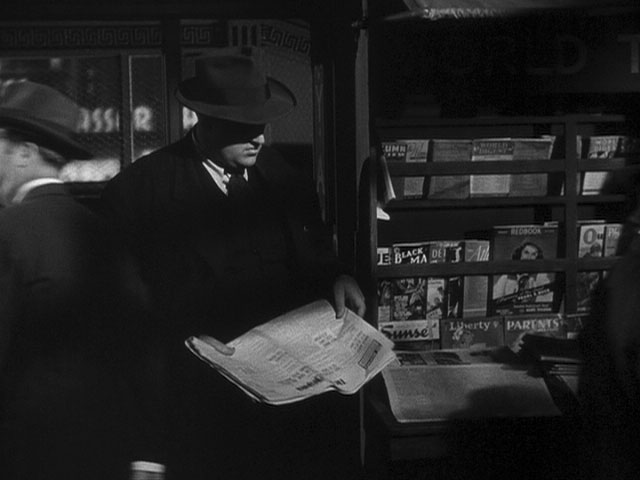
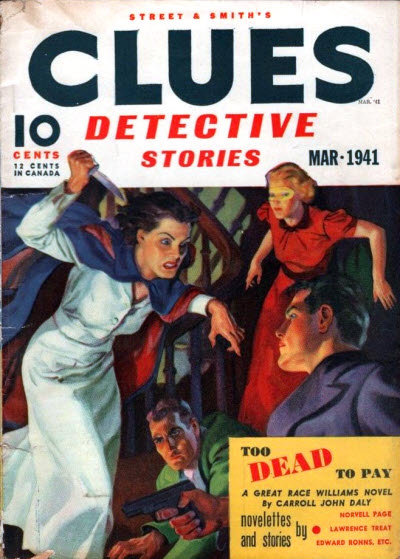
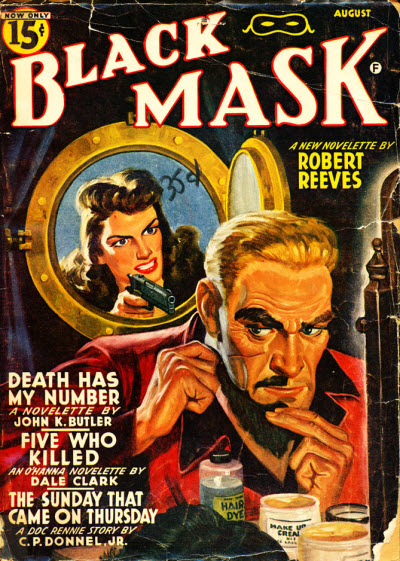
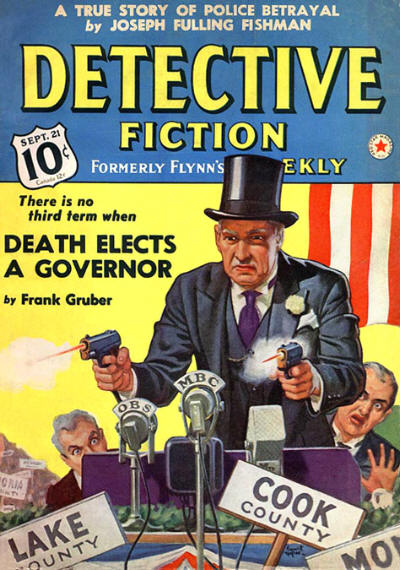
In this shot from the film, police detective Ed Cornell (Laird Cregar) passes a newsstand. Near his left hand is a row of four pulps: Clues (March 1941), Black Mask (August 1941), Detective Fiction Weekly (September 21, 1940), and The Shadow (issue unidentified).
It’s probably not an accident that these pulps were selected. Primarily a crime-fiction writer, Fisher made his name in all four.
He appeared in Clues fourteen times from 1935-43. His Black Mask run was brief but memorable: nine stories from August 1937 through April 1939. He could be found frequently in DFW: twenty-four appearances from 1935-41.
But it was The Shadow that received the bulk of his sales, a staggering 130 stories. They began in 1935 and continued into 1943, long after his Hollywood success had been established. They were all back-of-the-book shorts, most featuring characters Sheridan Doome and The Kid, in alternating issues. The Doomes were published under the byline of Stephen Gould. After 1939, all of Fisher’s Shadow stories appeared under pennames.
None of the issues displayed in the shot feature Fisher stories, unless there’s one in The Shadow. This “Easter egg” (highly unlikely to be recognized by the audience) was worth a little effort — but not that much effort.
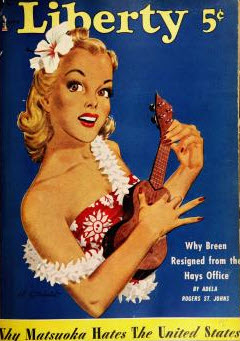
Bonus Fisher landing strip . . . Just below the pulps is another magazine Fisher appeared in from time to time: Liberty (July 5, 1941).
Tom Krabacher let me know that Library of America with their “Story of the Week” recently spotlighted another Op yarn by Hammett — the excellent “Zigzags of Treachery.”
Free.
A little intro that’s pretty good (if you’ve been around, you know it all, but if you’re new, it might offer a discovery or two). A nice postcard image of Pacific Street in the era.
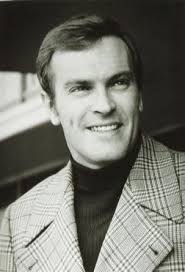
The handsome devil above is Don Chastain, and the mere mention of his name sent Brian Leno off into a web of connections — no doubt prompted by all his ongoing work on the boxing scene known to Texas writer Robert E. Howard, covering pugilists such as Kid Dula, a.k.a. Cowboy Dula. The news is that Brian almost has slugged his way through a complete first draft.
Brian’s a pretty clean writer. A first draft isn’t that far away from a final draft.
Don was the son of Clyde Chastain, a tough boxer who took on Cowboy Dula at least twice.
Chastain, in a bloody fight in November of 1930 took a decision from Dula. The Cowboy beat Chastain, also by decision, in May 1932.
Chastain was a pretty good fighter. Fought some big names in South Africa and for a time was managed by “Pa” Stribling, father of Young Stribling, who was a heck of a fighter and was tragically killed in an motorcycle accident.
I cover this stuff in my book, which will be finished (first draft) as soon as my current computer troubles are fixed.
Robert E. Howard saw Chastain fight, and he mentions in a letter to Lovecraft that he traveled to Fort Worth and saw Chastain take on Jack Doss — Doss shows up in REH’s autobiographical Post Oaks and Sand Roughs as the boxer Jack Goss. (Glenn Lord says it’s so and of course he’s right.)
Back to Clyde’s son. Don was nominated for an Emmy for a Gunsmoke episode — superior entry in the series too. He was in Fathom, which starred Raquel Welch. What a lucky guy!
Welcome to a hard-boiled and not without noir blog with news and reviews, occasional outbursts of maniacal Autograph Hound activity, plus archival records from the forty-five year run of The Dashiell Hammett Tour.