Hammett: “Bodies Piled Up”


After a hiatus during which he obviously spent some safari time in the pulp jungle hunting down rare and elusive pulps, Terry Zobeck is back to let us know the extent of the editing done to yet another Op tale by good old Frederic Dannay. Terry began this coverage with “This King Business” last summer, followed by “Death and Company,” then “One Hour” and most recently “It.” And of course he has detailed the editing on six other non-Op Hammett stories and the three shorts featuring Sam Spade. You can mount your own expedition into the wilds of the blog archives and track them all down, if curious.

Here’s Terry:

Recently, I managed to snag another issue of Black Mask containing a Hammett story, the pure text of which has long been unavailable — the December 1, 1923 issue with the Op story “Bodies Piled Up.” Dannay reprinted this story under the title “House Dick” in the April 1947 issue of EQMM, and then collected it in Dead Yellow Women later that year.  More recently, the story was reprinted in Nightmare Town (1999) using Dannay’s text.

“Bodies Piled Up” doesn’t deserve to be among Hammett’s forgotten stories; it is an Op story after all and, while not among the very best, it is entertaining. The Op is hired by the Montgomery Hotel in San Francisco as the temporary hotel detective or “house dick.” All is quiet until the final day when the Op follows a blood trail in one of the rooms and discovers three bodies stuffed into a closet. They come falling out one after the other when the Op opens the door, shocking even our hardboiled hero. And while the Op doesn’t do much detecting, there is a terrific three-way shoot-out at the end in a speakeasy between the Op and two gangsters.

Beyond changing a perfectly good title, Dannay took a light pencil to “Bodies Piled Up,” but at least one of the edits was especially unfortunate. One of the pleasures of the Op stories is his frequent asides about the tradecraft of manhunting, like when he tells us the particulars of shadowing in “Zigzags of Treachery.”  In “Bodies Piled Up,” Dannay deleted the Op’s ruminations on the usefulness of knowing the motive to apprehending a murderer.

As usual the following list provides the page number, the line number and whether it is from the top or bottom of the page, and the affected text — Hammett’s original wording is underlined. The page numbers refer to the story as it appeared in 1947 in Dead Yellow Women.

Page    Line     Top/Bottom    Text

81        Title                            House Dick Bodies
Piled Up

81        8          top                   Then
things changed. [Should be a separate paragraph.]

81        9          top                   the
assistant manager on duty at the time

83        1          top                   next
door to Develyn’s office, in fact.

83        10        top                   of
the their persons

83        10        bottom            and
telephoned Stacy.  She had seen no one
in the corridor nearby as she entered the room.

85        9          bottom            to
the guilty one. It is on this account that murderers are, as a rule, more
easily apprehended than any other class of criminals.

But a knowledge of the motive isn’t indispensable—quite a few murder mysteries are
solved without its help.  And in a fair proportion—say, 10 to 20 percent—of cases of where men are convicted justly of murder, the motive isn’t clearly shown even at the last, and sometimes is hardly guessed at
.

87        13        top                   and—so
the talk went—
an occasional judge

88        11        top                   Then
I jumped out of bed.  [Should be a
separate paragraph.]

89        11        top                   whose
clothes are always soiled; and the management hasn’t yet verified the rumor
that the country has gone dry
.

91        11        top                   but
I didn’t try to solve it now. I kept away from the bullets that were flying
around as best I could and waited.

91        4          bottom            His
dying face twisted into a triumphant grin.

91        1          bottom            He
shuddered and died.  [Should be a separate
paragraph.]

With the addition of “Bodies Piled Up” to our collection of reclaimed pure texts, we now lack only the following seven stories; if anyone has any of these, please consider contributing to this project:

  • The Vicious Circle (reprinted as The Man
    Who Stood in the Way)
  • Night Shots
  • Afraid of a Gun
  • Who Killed Bob Teal?
  • Mike, Alice or Rufus (reprinted as Tom,
    Dick or Harry)
  • Corkscrew
  • The Nails in Mr. Cayterer
Posted in Dash, Frisco, Lit | Tagged , , , , , , , , |

Frisco Beat: Call Me Al — Al Catraz

For a brief while in there, ennui seized me in its grip, and it seemed like the only thing I had to live for (in the current popular entertainment landscape, at any rate) was the return of The Walking Dead, any day now. Or, as I like to think of it: Daryl Dixon vs. the Zombies. 

I was kind of laying low until January 10 slipped past, the 51st anniversary of Hammett’s death — on the 50th anniversary longtime Hammett fan and author Joe Gores also died (as I was saying on the tour, “You know, that’s taking this whole being a big Hammett fan a little too far”), and I could see the unfortunate talk of a Curse starting to circulate if I followed suit this go-round. I saw Vince Emery and Rick Layman at the Hammett fest a few days ago, so they made it through okay, too. And Zobeck has turned up after a few weeks of ominous silence.

Yeah, I did exit the lair to catch The Artist — as a big fan of Doug Sr., I loved it (very nice use of action clips from The Mark of Zorro). Missi Pyle (always good) did a great thumbnail in the Jean Hagen role. And I wasn’t aware of it until the front credits rolled, but it even features Ed Lauter!

And because it’s got the local angle going for it, plus crime and some kind of Huge Mystery, I decided to give Alcatraz a try. I’ve seen the four episodes thus far, and like it okay — if they pulled it tomorrow, though, it wouldn’t bother me. My biggest problem with it: Sarah Jones as the main star. I can’t get past the fact that she looks to be maybe 20 years old (yes, I checked IMDb and she’s reported to be 29). I can’t see her as an actual San Francisco homicide detective. Good for her that she looks that young, but we’re talking my Suspension of Disbelief here, and it’s just not Willing to Suspend.

Other angles — Hurley, Sam Neill, the escaped inmates, the warden scenario — I like fine. If they never did anything but showcase the recapture of one inmate per episode until the show finally gets cancelled with hundreds of inmates unaccounted for, I might watch for most of a season or two.

Sure, the Big Unexplained Mystery angle might turn out to be pretty good, if they have time to get to it. But this show is from some of the same guys who did Lost, so I wouldn’t hold my breath. I watched the first season of that show off DVDs, and might have been tempted to see more except I happened across an article in Entertainment Weekly or a similar mag which mentioned that the creators were big fans of Stephen King. Great. That means they’ll Blow Up the Island. They’ll feature something incredibly hackneyed, like Giant Spiders. Man, they might as well have trumpeted that they would have no idea how to end the show. And so, today, I’m not investing any passion in the mysterious back story for Alcatraz.

I do like certain other angles. Leon Rippy as the prison doc, he’s always interesting. Plus Geri Jewell comes on scene, making it a little Deadwood reunion.

And while much of the show is shot in Canada, they have filmed some action on the real Rock, and I can watch it for that aspect alone. I’ve visited Alcatraz many times over the years, from the days in the 1970s of the groups led by guides to as recently as a year ago (I went on the very first nighttime tour many moons ago — I like The Rock).

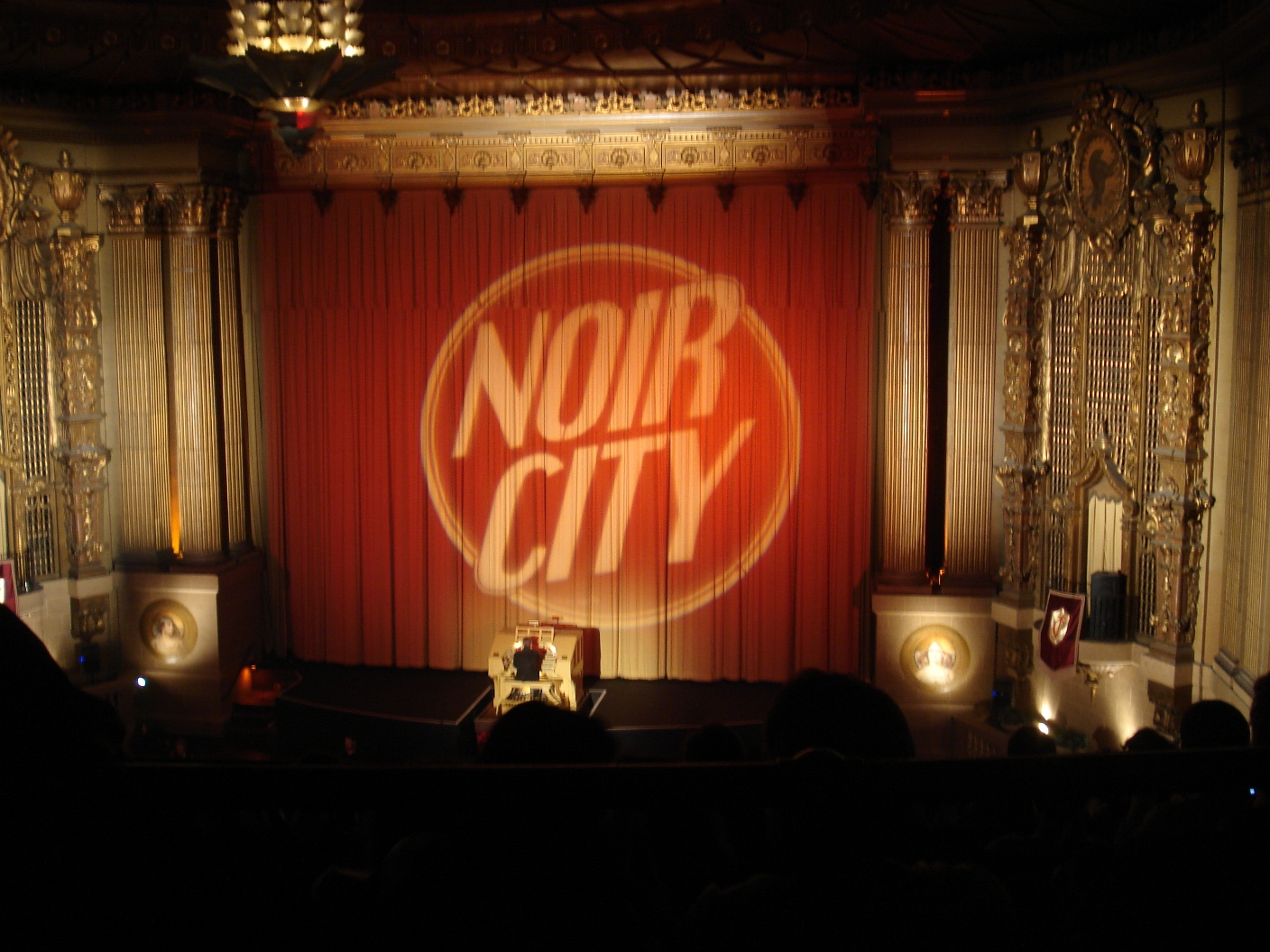
It’s the same factor with many of the San Francisco movies they showcase for Noir City — no, the movie just isn’t that great, but you can see local history right there on the screen.

Eventually, shows like this may be of lingering interest mostly because of the local angle, and the fun you can have separating the real from the fake locations as it rolls. I enjoyed Monk, as an example (except for the incredibly bad two-part finale — talk about losing control of an idea), but not much of it was shot in San Francisco, and locals make fun of it for that reason.

Leo Grin was just telling me how the creators of recent TV shows make similar fun of the shows of yesteryear, the 50s or 60s or 70s, because the technical end of things is so much more polished these days — the special effects are much better, the shootouts more realistic — but how they don’t seem to understand that in thirty years they’ll become their own kind of joke with Canada-as-America — how for people who know San Francisco (or Chicago, Detroit, etc) they may as well have propped up crude cardboard cutouts behind the actors.

And for news of the moment, how about the story that fans of the show are sneaking off to look for the secret HQ of Sam Neill on The Rock? I guess TV is too much to handle for some people.

You might want to wait for the current mania to die down, but the last several times I made the trip the park rangers you’ll see standing around were quite willing, in fact, to take small groups of four or five people off to areas behind-the-scenes (the real scenes, not the fake Canadian set scenes) — tunnels and sub-basements that date from the Civil War, the elevated mesh-enclosed walkway the guards patrolled with rifles, and so on. You have to ask, and it couldn’t hurt to show that maybe you know something more than fans of the TV show.

My trick to show that I am in-the-know is to drop the name of Creepy Karpis. If you don’t know Creepy, you should. Look him up. A real bigtime criminal in the real world who was imprisoned on the real Alcatraz.

Posted in Dash, Film, Frisco, News | Tagged , , , , , , , , , , , , , , , , , , , , , , , , |

Hammett: Book Reviewer

How about we kick off February with The Return of Terry Zobeck?

Terry took a little time off there from blogging (hey, so did I), but he’s back with another exploration down an interesting byway of Hammett studies — the book reviews:

There’s a new website, Unz.org (named after its creator Ron Unz), featuring scans of several thousand magazines and pulps, three of which feature content written by Dashiell
Hammett.

Hammett had been a published author for just over two years when he
began writing book reviews, first for The Forum, then The Saturday
Review of Literature
, and finally for the New York Evening Post.

Unz.org has posted scans of two of the three reviews Hammett wrote for The
Forum
and all of those that appeared in 26 issues of The Saturday Review
of Literature
between 1927 and 1929. Only a handful of these reviews have ever been reprinted (five appear in Richard Layman’s Discovering the Maltese Falcon and Sam Spade, along with excerpts of seven of his reviews from the New York Evening Post).

Unfortunately, the third review for The Forum, “Genius Made Easy” from
the August 1925 issue, is not posted; it’s the one missing from my collection,
so I don’t know the title of the book he reviewed.

Most of the reviews are short, wry pieces that quickly summarize the
plot and highlight the strengths and weaknesses of the book — usually more of the
latter than the former. One of my favorites is his opening sentence of the
review of Carolyn Wells’ The Tannahil Tangle: “This carelessly put-together detective story deals with our old friend murder-in-the-practically-hermetically-sealed-room.” Even in 1928 the locked room had become a tired plot device.

Here’s his plot summary of Augustus Muir’s The Shadow on the Left: “Most of the things that happened were dark-of-the-moon expeditions among burns, cairns, castles, crags, crypts, dikes, gillies, glens, lochs, moors, and other Scottish appurtenances.”

While most of the authors whose books Hammett reviewed are long forgotten, several are still remembered and many are still read, including Ellery Queen, Dorothy L. Sayers,
C.S. Forester, S.S. Van Dine, J.S. Fletcher, Edgar Wallace, and Baroness Orczy.

I can’t help but wonder if Frederic Dannay ever knew that Hammett reviewed the first Ellery Queen novel? Of the Queen father and son detective team Hammett wrote, “They are agreeable enough, if somewhat too coy and too chorus-like in their repartee.” In summing up the story he noted “this is a competent piece of work for those who like their detective stories straight”.

Below I’ve listed all of Hammett’s reviews posted on Unz.org. The link
above will take you to the home page of the site. It is a pretty straightforward job to navigate through the site to the Hammett material.

Start by clicking on the “periodicals” button. This will take you to a page with a number of options. The fifth line is a menu for the titles; clicking on the appropriate capital letter button will take you to all of the titles starting with that letter: “F” for The Forum and “S” for The Saturday Review.

You will then see an alphabetical listing of the magazine titles. Click on the appropriate title; this will take you to a display of all the issues available arranged by year. Simply find the right year and click on the image. You will then find a page of all the available issues for that year. Scroll down the list until you find the issue you want. In the case of The Forum, each page is indexed. For example, select 1924 and scroll down to the November issue. You will find that the last entry is Hammett’s review.

Simply click on the link and it will bring up a PDF of that page.

For The Saturday Review, for which most of Hammett’s reviews are anonymous, after you’ve called up the relevant issue, it is easier to find his reviews by inputting the page number — which I’ve provided in parentheses at the end of each entry below — in the “jump to” box at the top of the page. You can increase the font size of the PDF with the “PDF size” button at the top left of the page.

Enjoy.


The Forum

November 1924                      “Mr.
Hergesheimer’s Scenario” — Review of Balisand
by Joseph Hergesheimer (p. 720)

January 1927                          “The
Cabell Epitome” — Review of The Music from
Behind the Moon
by James Branch Cabell (p. 159)


The Saturday Review of
Literature

January 15, 1927                    “Poor
Scotland Yard” — Reviews of False Face
by Sydney Horten; The Benson Murder Case
by S.S. Van Dine; The Malaret Mystery
by Olga Hartley; Sea Fog by J.S.
Fletcher; and The Massingham Butterfly
by J.S. Fletcher.  (p. 510).

March 19, 1927                      The Story of Scotland Yard by George
Dilnot (p. 668)

April 16, 1927                        “Guessers
and Deducers” — Reviews of The Affair in
Duplex
by William Johnson; The Kink
by Lynn Brock; and Aurelius
Smith — Detective
by R.T.M. Scott (p. 734)

May 21, 1927                          “Current
Murders” — Reviews of The House of Sin
by Allen Upward; All at Sea by
Carolyn Wells; The Girl in Black by
Victor Bridges; The Tattoo Mystery by
William LeQueux; and The Victory Murders
by Foster Jones (p. 846)

June 11, 1927                          The Lost Adventurer by Walter Gilkyson
(p. 901)

December 10, 1927                Reminiscences of an Ex-Detective by
Francis Carlin (p. 439)

February 11, 1928                  Mysteries of the Missing by Edward H.
Smith (p. 599)

April 21, 1928                        Great Detectives and Their Methods by
George Dilnot (p. 810)

October 13, 1928                    The Man Who Killed Fortescue by John
Stephen Strange; The Fatal Kiss Mystery
by Rufus King; Hurrying Feet by
Frederick F. Van De Water; Wilderness
House
by Foxhall Dangerfield; The
Quartz Eye
by Henry Kitchell Webster; and Perishable Goods by Dornford Yates. (p. 251-253)

October 20, 1928                    The Clever One by Edgar Wallace and The Daughter of the Hawk by C.S. Forester (p. 282)

October 27, 1928                    The Unpleasantness at the Bellona Club
by Dorothy Sayers; The Shadow of
Ravenscliffe
by J.S. Fletcher; and
The Shadow on the Left
by Augustus Muir (p. 301)

December 1, 1928                  The Tannahill Tangle by Carolyn Wells
and The Wrist Mark by J.S. Fletcher
(p. 440)

December 8, 1928                  Blind Circle by Maurice Renard and
Albert Jean and The Prisoner in the Opal
by A.E.W. Mason (pp. 492 and 493)

December 22, 1928                Skin O’ My Tooth by Baroness Orczy (p.
543)

December 29, 1928                Monsieur X by Robert W. Sneddon (p. 559)

January 5, 1929                      The Female of the Species by H.C.
McNiele (p 576 and 578)

January 12, 1929                    Murder Mansion by Herman Landon and Murder Island by Wyndam Marlyn (p. 591)

January 26, 1929                    Enter Sir John by Clemence Dane and
Helen Simpson (p. 630)

February 9, 1929                    Murder at Sea by Richard Connell; The Burning Ring by Kay Burdekin; Phantom in the Wine by Jean Stark; and The Case with Nine Solutions by J.J.
Connington (pp. 669-670)

April 27, 1929                        Miasma by Elizabeth Sanxay Holding; The Linden Walk Tragedy by Foxhall Daingerfield; and Hooch by Charles
Francis Coe (p. 961 and 962)

May 4, 1929                            Lord Peter Views the Body by Dorothy L.
Sayers (p. 983)

September 7, 1929                  The Needle’s Kiss by Austin J. Small (p.
116)

September 21, 1929                Murder at Bratton Grange by John Rhode
(p. 164)

October 5, 1929                      The Monster in the Pool by Armstrong
Livingston (p. 223)

October 12, 1929                    The Roman Hat Mystery by Ellery Queen
(p. 262)

October 26, 1929                    Mystery of Spanish Hacienda by Jackson
Gregory (p. 324)

The Unz.org site also includes scans of the old leftist weekly, The New Masses (p. 23).
Hammett wrote two “letters to the editor” in this magazine — neither have ever
been reprinted. The first, from the December 16, 1941 issue, is entitled “A Communication to All American Writers” and urges Congress to declare war on Germany and Italy following the Japanese attack on Pearl Harbor (by the time of publication, this had already been done) since “Our war is with the entire fascist Axis, not with one end of it.” Hammett signed the letter as the President of the National Board of the League of American Writers.

The second letter appeared in the May 19, 1942 issue (p. 21) and is entitled “Help Them Now.” As the Chairman of the Exiled Writers Committee, Hammett pleads with American
Writers to provide financial support to 25 “exiled anti-Nazi authors” now living in North America. He writes: “We have provided their food and lodging since they arrived, but we have no money for them next month unless you come to their rescue again.” He then selects seven authors to highlight, noting their specific plight and the amount of
monthly support they require; the authors include Anna Seghers, Effon Emoin
Kisch, Paul Westheim, Ludiviff Renn, Bruno Frei, Aladar Tamas, and Theo Balk.

Within a few months, Hammett took a more active role in the fight against fascism; by
September 1942 he somehow talked his way into the U.S. Army for the second
time.

Posted in Dash, Lit | Tagged , , , , , , |

891 Post: Tub Shot, B&W

January is almost gone. Noir City is done. And The Voice of Noir has left the building.

Yeah, the windows of the Sam Spade apartment in 891 Post will be dark again as you gumshoe past in the night, after Bill’s brief return during his Noir City MC duties. For a few days, anyway, it was like the old days, lights blazing until the early hours.

My favorite image from this recent stay appears above, as Bill brought back his trademark noir towel and muscled it onto the bar with the white towels which Hammett insisted on. (And someone added a shower curtain since the last time I took a gander at the Spade bathtub.)

B&W. Maybe even a tad chiaroscuro. Like those movies that flickered on the big screen.

Posted in Dash, Film, Frisco | Tagged , , |

Sinister Cinema: The Fest is Over

Noir City has folded up its sidewalks and slunk off into the night, and almost all that’s left are memories — and a really intriguing puzzle I noticed in the final day’s showing of the film Roadhouse Nights. More on that when my team of researchers finishes some detective work.

Got to see John Stanley again, after a long time — we’re forever linked in the land of cinema by our mini-movie for Creature Features entitled The Attack of the Incredible Killer Scarecrow, which has reappeared on various video and DVD compilations JS has marketed over the years. The shot above was taken on Tuesday January 24, comedy night — the selections of Unfaithfully Yours and The Good Humor Man got pretty funny at times, though the Preston Sturges was pretty damn dull for three-quarters of the action (yeah, I know, sacrilege). A funnier and much more noir bill would have been My Favorite Brunette and The Fuller Brush Man, but then they just may be too well known to haul in an audience off the mean streets.

And I learned that the “M” is for Mystery bookstore closed down shop in December — Ed, the owner, at age 80 decided to really retire (“M” was his second endeavor, after he retired from decades on his regular job), and adios, amigos. You can catch a couple of shots of Ed, garbed in white, shot during Noir City 2009. Uhoh. I hope Ace Atkins will find another place for signings next time he rolls through the burg. For the moment, and for the first time in over thirty years, the Bay Area doesn’t have a single dedicated mystery bookstore.

While that’s not good news, on the up side, Kevin Hunsanger of Green Apple Books stepped in and took over the sales tables, and seemed to be doing okay — I signed a lot of tour books during the Hammett-thon on the last day. And John Stanley was working his stock from a table — his previous title, I Was a TV Horror Host, released early in 2007, is down to under 100 copies on hand and around 50 with a distributor. Anytime a small press book moves out a few thousand copies, that is very good news.

Posted in Film, Frisco, News | Tagged , , , , , , , , , , , , , |

Rediscovered: The Poets Gawsworth and Maclaren

Recently I heard from Lucilla Maclaren Spillane, who was looking around the Web for Steve Eng. Steve, if you recall, is the guy who brought M. P. Shiel fully to my attention, and completely sold me on John Gawsworth as a fascinating literary figure — whether you like Gawsworth’s own poetry or are more modernist in your tastes,  his championing of various poets and writers in need of rediscovery, his life in the pubs as the reigning King of Redonda, his talent as an ace book scout — if you’ve got any kind of Bookman Blood in your veins, you’ve got to appreciate Gawsworth.

Lucilla’s dad Hamish Maclaren was one of the poets in the Gawsworth Circle, and she’s sent in some memories to keep their names active in the blogosphere. If it isn’t obvious, you can consider Gawsworth a Patron Saint of this site, and I’m delighted to have her step in as a Guest Blogger. These days she divides her time between Malta, the Republic of Ireland, England and America, and says, “I believe that poets like Housman, Maclaren, Gawsworth and Edmund Blunden posed the biggest threat, and still do, to the post-modernist junk that today is called poetry.” Her MA thesis A Paradigm Shift in Poetry? The Influence of A. E. Housman (2011) cites both her father and his great pal, of course.

Here’s Lucilla:

Gawsworth and my father went back to the days of the windmill in the photo I have attached. When I bought The Collected Poems of John Gawsworth, I found that his poem
“The Mill” features Turville Mill — a.k.a. Cobstone Mill or Ibstone Mill.

I met John Gawsworth several times, first when he visited in my childhood. He would periodically raid my father’s waste-paper basket and rescue poems. He pasted them into a scrap-book, which he signed.

I read at the age of four and had an early book picturing fairies. We lived in
the country and I made an unsuccessful search for them. I formed the opinion
that just because you can’t see something, that doesn’t mean that it isn’t
there
. I believe this was constructive in making me more aware of the magic
of poetry by the age of six.

By age nine I realised that the scrap-book was not safe in my father’s hands, because he would try to re-write inspired work. I squirreled it away into my suitcase when I was sent to boarding school and have had it ever since. In later life it formed the basis of serious research into my father’s work.

I’m thinking there must be poets still alive, who knew Gawsworth, better than I
did. I am sure something could have been done for him.

My father never recovered from my mother’s death and at first, he was in a bad way. I didn’t want any social services people near him; they would have done more harm than good. We had a tiny, rented, bungalow and only I was working. My father and John had lost touch, but somehow reconnected.

John would turn up with a bottle of whiskey. My father would have a “night-cap” and drank sensibly. I could feed John, but couldn’t have handled his alcohol problem and there was no-where he could sleep. I regret that I was not in a position to have done more for my father’s oldest friend. I strikes me now, though, that there must have been plenty of people whom he had helped, who were still living and better placed than I was.

John would turn up, always dressed in an enormous overcoat, the lining of which had disintegrated. I am sure it must have held all manner of things, plus the inevitable bottle of whiskey. John had a bad leg, possibly left over from the war, and walked with a short stick of a hard dark reddish wood, that had a flattish knob on top to hold it by. I am not sure how, but we somehow inherited this stick which I still have.


Posted in Lit | Tagged , , , , , , , , |

Hammett: The Film Fest Coming Up Fast

If around the burg on Sunday, don’t forget the close-out to the tenth annual noir movie marathon in the Castro, with a one-day marathon all-its-own of flicks adapted from Dashiell Hammett.

You can get the schedule and suitable blurbs from an article by Thomas Gladysz which popped up yesterday on The Huffington Post.

A quote from the tour book — described as “detailed” and “lively” (and if you think that’s easy to bring off, try it sometime) — gets some play. Plus a nice blurb: “Though there has been much written about Hammett, the single best source for information on the writer’s time in San Francisco is The Dashiell Hammett Tour.” I can’t argue — that was the idea.

Posted in Dash, Film, News, Tour | Tagged , , , , |

Two-Gun Bob: Some Comments on the 106

Apparently my post on Birthday 106 for author Robert E. Howard has met with some grumbling in the so-called social media — I hear that at least one person has “disliked” it on Facebook. Jeez. Don’t know if I can continue on under such a devastating assault.

But I guess that’s what spurred Bill “Indy” Cavalier to send in some comments. Indy is the long-time honcho of the Howardian a.p.a. REHupa — as I have said long since in print and often enough in conversation, he is without question the greatest of the Official Editors for that group.

Offhand, I don’t remember my exact rankings for the next spots, but I believe I put Brian Earl Brown as second most important (which met with howls of rage from many, but BEB kept that amateur press association going for years, in hard times, and REHupa simply wouldn’t be around today without his efforts then), with third and fourth place being debatable between Jonathan Bacon and Morgan “The Morgman” Holmes. No one else made a significant enough mark to earn a fifth place ranking.

I say this with some understanding of history, and the fact that REHupa is now hovering at around 230 mailings — I first joined with mailing 11 in 1974 and have returned to the action a couple of times in the years between then and now.

And herewith, Indy speaks:

“Hey, Don! Nice post re: Howard’s birthday. Really liked your thoughts re: inspired by Glenn. Pretty well encapsulates our generation of Howard Heads.

“I’m in agreement about the six story paperback — tasty little item — and it was sold at Wal-Mart, so that had to help distribution. I’m pretty sure the text was taken from the Del Rey’s: in ‘The People of the Black Circle,’ Conan calls the governor a bastard, and that’s not in the Lancer.

“Another point re: Margaret McNeel: she told me once that Doc Howard did indeed deliver her.

“Always happy to help a bud with little factoids!

“Don’t let the bastards wear you down!”

One little email, and both Conan and Indy call some guys bastards. Oh well, that’s the rough and tumble Howardian arena for you. If you don’t like it, you probably should be reading something more sedate.

Posted in REH | Tagged , , , , , |

Frisco Beat: Falcon, Falcon, Who’s Got a or the Falcon?

Getting slightly busy with the Noir City X action, dropping into the old haunt of Sam Spade’s apartment for pre-opening night drinks with Bill “The Voice of Noir” Arney, who is camping out in his former digs during the festival — then returning to Sam’s Place for post-opening drinks. Noir movies and drinks, they really go together.

Bits of dialog from the late-night talk that stick:

“I’m not someone you’d want to send into space.”

“It was the least she could have done, without doing anything at all.”

“I’m an architect, not a plumber.” (“Dammit, Jim!”)

Yeah, there’s a problem with the — never mind. I guess there can be too much information, right?

I did take a moment out of the dizzy whirlwind to hop over to the ReelSF site to check locations from The House on Telegraph Hillgreat site, you’re missing out if you like noir movies and San Francisco and haven’t prowled around there yet.

Plus, Drew Bourn of the Using San Francisco History blog just put up a nice article on tracking down Maltese falcon statues around town — if you know of any he’s missed, pop him a note. The piece features a nice philosophical angle. Philosophy and drinks go together, too.

Posted in Film, Frisco | Tagged , , , , , |

Two-Gun Bob: 106 and Counting

Birthday 106 for Robert E. Howard today. Almost 76 years since he committed suicide on June 11, 1936. And his name lives on. Not bad for a writer who plied his trade in the pulps and didn’t see a single book appear under his byline in his lifetime.

On the human front, it’s been kind of grim in Howard Circles, with the death of Glenn Lord on the last day of 2011 — plus I heard that Margaret McNeel passed away on January 11. A nice lady, I always enjoyed seeing her whenever I’d roll into Cross Plains, Texas for Howard Days.

I was chatting on the horn with my Howardian pal and cohort Leo Grin and he mentioned something about Margaret that I don’t see in the obit, and if Leo heard it right back in the day. He is under the impression that Margaret was one of the last surviving Doc Howard Babies — among the many babies delivered by Howard’s dad, Dr. Isaac M. Howard, in the course of his local medical practise.

The passing of an era right before our eyes — but then what is Howardian fiction and poetry but the essence of the passing of eras, the foundering and crash of civilizations, the individual facing down the odds against the inevitable last stand? Yeah, no one is as simultaneously exciting to read and gloom-ridden to brood over as good old Two-Gun Bob.

On the literary front, I did notice that a book I’ve kind of been waiting for most of my life appeared last year. I was reminded by a tribute my occasional Guest Blogger Brian Leno did for Glenn Lord, in which Brian mentions that he hated the fact that the Lancer paperbacks for the Conan series stuck L. Sprague de Camp and Lin Carter’s names on the spines, and how impressed he was with the presentation Glenn gave Howard in the Lancer paperback Wolfshead — clean, classy, not an once of fat from someone trying to hog the action and glom onto the glory.

Brian has told me that his teenaged self of the 1960s actively hated looking at those defiled spines on his bookshelf, and my own reaction to the de Camp and Carter tampering soon enough unleashed “Conan vs. Conantics.” My essential opinion has never changed — if you happen to have a copy of the very first issue of The Cimmerian from 2004 you’ll see that I pretty much hated the overall presentation of the currently available three-book set of the Conan series from Del Rey. It is great that the pure texts for the Conan stories saw print for the first time — a true milestone. But the long introductions and page after page of crap notes in the back of those books are as intrusive as de Camp’s editorial meddling.

I enjoy good litcrit as much or more as the next guy, but if that’s what you want to do, hey, write your own book or put your profound thoughts up on a website. I always enjoyed talking with the late Steve Tompkins on the phone, but honestly I can’t read the long rambling intros he did for some of the other current Del Rey titles by Howard, and some of those books I just haven’t bothered picking up. (At least the supercilious intros de Camp did for the Lancer Conans were short, I’ve got to give him credit for that.)

But I realize that the idea of the presentation I want for Howard may well have been set by pulling Wolfshead off a spinner rack in a drugstore in 1968 — or the even more evocative 1969 Dell paperback of Bran Mak Morn, with one of Frazetta’s finest, moodiest cover paintings. Glenn edited that one without even insisting on a credit line on the title page. Man, those were great first editions.

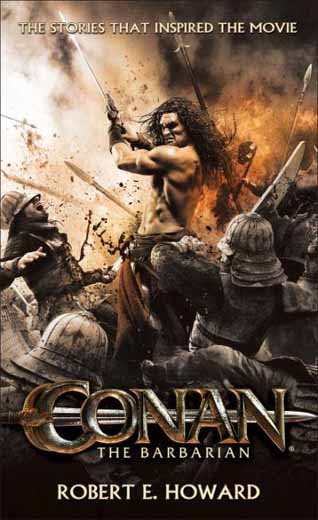
And last year an edition of six of the finest Conan stories appeared without a ridiculous introduction or a trace of boring academic apparatus cluttering up the format. I’ll presume the stories are pure texts (at this stage of the game, you’ve got to have pure texts), and I’d rather have a painting by Frazetta on the front, but what the hell, yes, this is what I have wanted to see since the late 60s.

Released in connection with the film starring Jason Momoa, this book may well be the best thing to come from that project. The movie bombed, critics stuck it on worst films of the year lists. There was lots of chatter about it before, during, and after in the Howardian webisphere — I didn’t bother chiming in, because I didn’t have much hope for it and my opinions weren’t that different from many others stated.

I think Momoa would have been fine as Conan with a better director and if they had used a script without including a clunky origin story (one of the worst things comic books have contributed to the culture, that need for an origin story when you could just jump into the action and roll). And he should have been forced to wear blue contact lenses, like Whoopi Goldberg used to do — you’re playing Conan, you need those volcanic blue eyes.

No, I didn’t think the film was great — you could pick out an image here and there, a brief sequence, and see what they could have done if things had gone differently. I didn’t invest anything in it, so I emerged unscathed, unlike my Howardian buddy Lightin’ Al Harron, who may be scarred for life.

And I got this book out of it, on the side. Cool. If you’ve never read Howard or the Conan stories and want a place to start, here you go. Some of the best tales (and there are many other best tales awaiting after these). No lesser talent trying to “collaborate” with Howard, no one boring you to tears with stuff you don’t need to know.

And it only took a little less than a century!


Posted in Film, Lit, News, REH | Tagged , , , , , , , , , , , , , , , |